


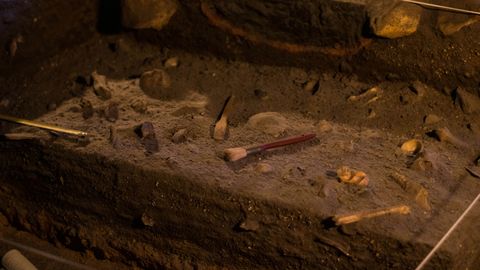
Malta's Islands Reveal Ancient Settlers Arrived Millennia Before Farmers
Translated from Estonian, summarized and contextualized by DistantNews.
At a glance
News
Sources not specified
Context piece
- Malta's islands offer unique insights into ancient human history, potentially predating agriculture by millennia.
- Archaeological discoveries suggest inhabitants arrived on the islands around 1000 years before farmers.
- These findings challenge existing knowledge about the capabilities of hunter-gatherer societies.
The Maltese archipelago in the Mediterranean Sea is proving to be an extraordinary laboratory for understanding ancient human life. New research suggests that inhabitants arrived on these isolated islands approximately one thousand years before the advent of agriculture, a timeline that significantly predates previous understandings.
These early settlers, whose presence has remained largely unknown until now, demonstrate advanced capabilities for their time. The discovery challenges conventional views on the migratory and technological prowess of hunter-gatherer societies. The islands' isolation has preserved unique archaeological evidence, offering a rare glimpse into a period of human history previously shrouded in mystery.
Malta's unique environment has allowed for the preservation of sites that might have been altered or erased on mainland continents. The findings from these islands are poised to rewrite chapters of early human settlement and adaptation, particularly highlighting the sophisticated nature of societies that existed long before settled farming communities emerged.
DistantNews Editorial
Originally published by Postimees in Estonian. Translated, summarized, and contextualized by our editorial team with added local perspective. Read our editorial standards.
More Stories
/nginx/o/2026/07/07/17768176t1hca75.jpg)
/nginx/o/2026/08/21/17868102t1h101a.png)
/nginx/o/2026/08/21/17867505t1h4860.png)
From Our Blog

What Gets Lost (and Found) When News Is Translated

The Critical Role of Diaspora Media in Global News

What Travellers Should Know About Countries with Restricted Press

A Digital Nomad's Guide to Following Local News

How the Same Story Looks Different in Different Countries
