


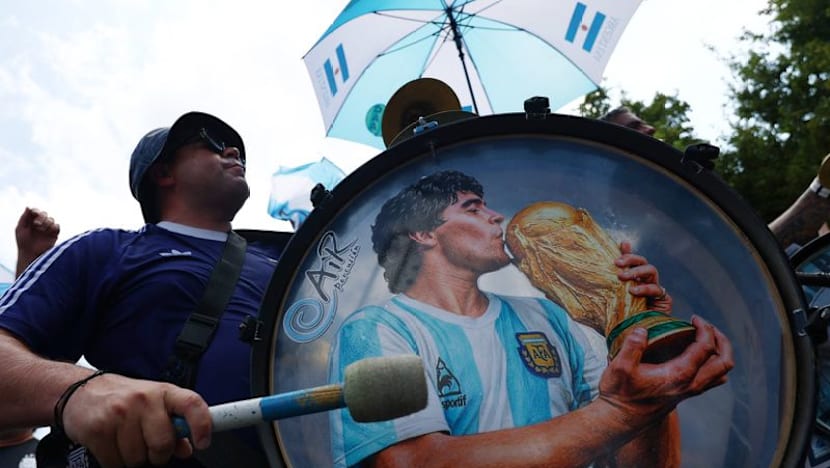
Maradona, Tepito and the mystery behind a $9 million shirt
Summarized and contextualized by DistantNews.
At a glance
In-depth
Named sources
Context piece
- Diego Maradona's iconic 1986 World Cup jersey, worn during his "Hand of God" and "Goal of the Century" goals against England, sold for $9.28 million at auction.
- The shirt's origins are shrouded in mystery, with a documentary exploring the possibility that it was sourced from the street markets of Tepito, Mexico City.
- Filmmaker Phidel McCabe's documentary, "El Diez: Made in Tepito," investigates the legend and truth behind the jersey's acquisition, highlighting Mexico's role in football history.
Diego Maradona's legendary blue jersey, worn during his infamous "Hand of God" and "Goal of the Century" moments against England in the 1986 World Cup, has fetched a staggering $9.28 million at auction. This iconic garment, however, may have a surprisingly humble origin story rooted in the bustling street markets of Tepito, Mexico City, a place known for its eclectic offerings.
you can find literally anything.
Filmmaker Phidel McCabe delves into this intriguing possibility in his documentary, "El Diez: Made in Tepito." The film explores the six days between Argentina's matches against Uruguay and England, investigating how the team, needing a replacement blue shirt after exchanging with Uruguay, acquired the now-iconic jersey from Tepito's markets. According to team accounts, the shirt was hastily modified with stitched-on badges and ironed-on American football numbers, lending it a unique, glittery appearance.
I came across an ESPN article about the story, and I'm a huge Maradona fan, so I went to the market and started speaking to people.
McCabe's investigation aims to uncover the truth behind the legend, acknowledging that competing versions of the story exist, even within Mexico City. He was inspired by an ESPN article and his admiration for Maradona to pursue the story. The documentary seeks to move beyond Maradona's legend to celebrate the craft of the workers who contributed to creating one of football's most recognizable images, especially at a time when many feel disconnected from the sport.
Even here in Mexico City, people aren't sure whether this story is true.
The film also emphasizes Mexico's integral, yet often overlooked, role in these historic footballing moments. McCabe hopes to celebrate Mexico's contribution and the culture of Tepito. The documentary's promotion includes a mural by Zapotec artist Ana Xhopa, which visually brings the story out of sporting folklore and into Mexico City's public spaces, highlighting the labor behind the global spectacle of football and honoring the merchants involved.
They had to come up with something in two days. They stitched on their own badges. They ironed on American football numbers. That's why the numbers are glittery. The whole thing feels like it could only happen in the '80s.
DistantNews Editorial
Originally published by CNA. Summarized and contextualized by our editorial team with added local perspective. Read our editorial standards.
More Stories


From Our Blog

What Gets Lost (and Found) When News Is Translated

The Critical Role of Diaspora Media in Global News

What Travellers Should Know About Countries with Restricted Press

A Digital Nomad's Guide to Following Local News

How the Same Story Looks Different in Different Countries
