


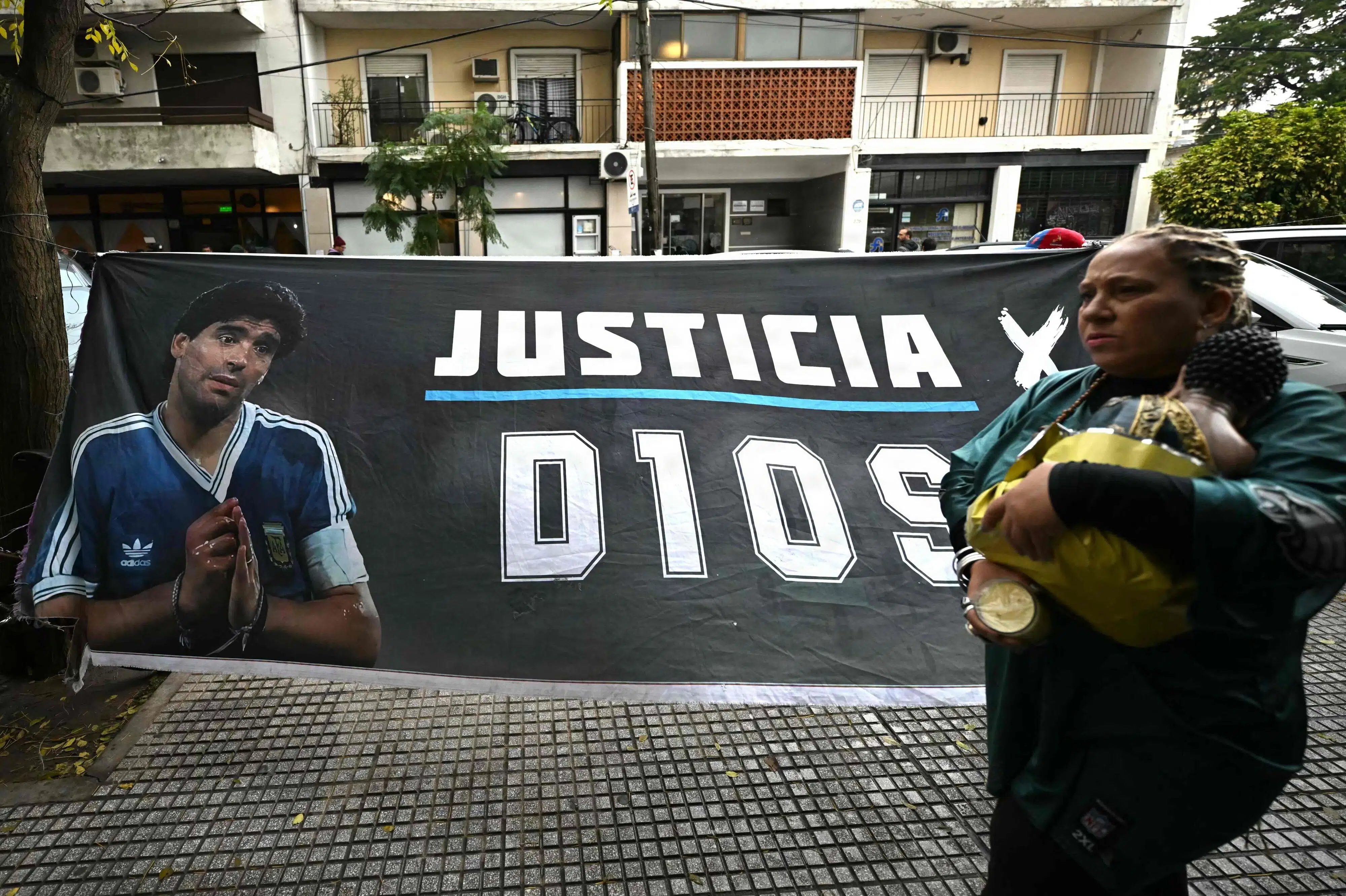
Maradona trial postponed over alleged evidence mix-up
Translated from Danish, summarized and contextualized by DistantNews.
At a glance
News
From a news agency
Ongoing story
- A trial over the death of football star Diego Maradona has been postponed for a week due to claims of swapped evidence.
- Defense lawyers allege that DNA samples presented in court belong to Maradona's late father, not the footballer.
- Seven health professionals are accused of negligence in Maradona's care, facing up to 25 years in prison.
The trial concerning the death of football legend Diego Maradona has been adjourned for a week. This delay stems from allegations that vital evidence samples were confused between the late footballer and his father, who passed away in 2015. The court aims to ensure the integrity of the evidence before proceeding.
Defense attorneys contend that the samples presented in court actually belong to Maradona's father. Maradona died in 2020 at the age of 60, following surgery for a brain hematoma. An autopsy revealed his cause of death as heart failure and acute pulmonary edema.
Seven healthcare professionals, including his personal doctor and psychiatrist, are currently involved in the trial, facing charges of possible gross negligence. One specialist testified that Maradona suffered from "chronic kidney disease." The court is also examining whether the decision to let Maradona recover at home instead of a hospital endangered his life. Experts noted that Maradona should have received daily medical attention, blood tests, and vital sign monitoring, especially given his significant weight gain and high blood pressure.
Images shown in court depicted Maradona with a severely distended abdomen due to fluid buildup in his final days. An autopsy confirmed he experienced severe pain for hours before his death. This specialist is the third to testify that Maradona's doctors missed crucial warning signs. The accused, who deny responsibility for the football icon's death, could face up to 25 years in prison. The trial was initially expected to conclude in September, but the impact of this postponement remains unclear.
As minimum, the patient should have been attended daily by a doctor and received daily care, daily blood tests and monitoring of his vital parameters.
DistantNews Editorial
Originally published by Berlingske in Danish. Translated, summarized, and contextualized by our editorial team with added local perspective. Read our editorial standards.
More Stories


From Our Blog

What Gets Lost (and Found) When News Is Translated

The Critical Role of Diaspora Media in Global News

What Travellers Should Know About Countries with Restricted Press

A Digital Nomad's Guide to Following Local News

How the Same Story Looks Different in Different Countries
