




Markets hold their breath as Turkey unveils 2027-2029 economic targets
Translated from Turkish and summarized by DistantNews. Read the original for the full story.
At a glance
Press release
Official statement
New plan
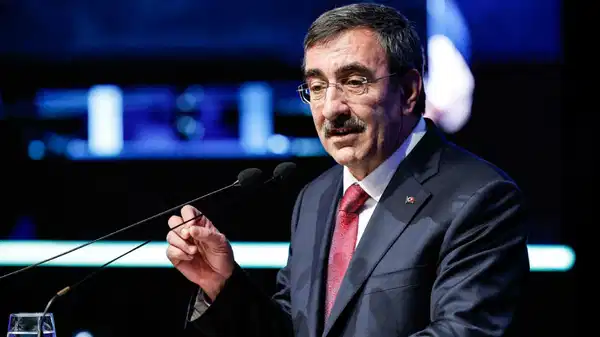
- Vice President Cevdet Yılmaz presented Turkey’s 2027-2029 Medium-Term Program, the government’s three-year macroeconomic policy framework.
- The program projects growth rising from 3.3% in 2026 to 5% in 2029, while inflation is targeted to fall from 28.4% to 9% over the same period.
- Yılmaz said regional wars, energy and commodity prices, global trade and protectionist policies had affected the economic outlook and required updated assumptions.
Turkey has set out a three-year economic roadmap, with the government expecting growth to strengthen gradually while inflation declines by 2029.
Vice President Cevdet Yılmaz said the economy is expected to grow by 3.3% in 2026, followed by 4.2% in 2027, 4.6% in 2028 and 5% in 2029. The program targets inflation at 28.4% in 2026, then 21% in 2027, 13.5% in 2028 and 9% in 2029.
We expect growth, which we forecast at 3.3% in 2026, to gradually strengthen and reach 4.2% in 2027, 4.6% in 2028 and 5% in 2029.
Yılmaz described the Medium-Term Program as the central policy document for the next three years. Updated annually and prepared in line with Turkey’s development plan, it sets out macroeconomic forecasts, the outlook for revenues, spending and borrowing, spending ceilings for public institutions and the government’s reform agenda. It also forms the basic framework for the budget process.
We aim for inflation, which we expect to reach 28.4% in 2026, to decline to 21% in 2027, 13.5% in 2028 and 9% in 2029.
He said the global economy had entered a period in which economic, technological and geopolitical developments were increasingly intertwined, reducing predictability and pushing risks to historically high levels. Regional wars had affected Turkey directly and indirectly, influencing energy and commodity prices, global trade, inflation expectations and growth forecasts. New forms of protectionism and uncertainty in trade policy were also weighing on the global outlook.
Yılmaz said assumptions from the previous program had been updated in response to developments during the year, especially the war in the region. The global growth forecast was lowered from 3.1% to 3%, while the growth forecast for Turkey’s trading partners fell from 2.4% to 1.6%.
Turkey’s economy is, of course, not independent of developments in the world and our region.
About this summary
Originally published by Sabah in Turkish. Translated, summarized, and contextualized automatically by DistantNews, with a note on how the source frames the story. Not individually reviewed before publishing. How this works.
More Stories
From Our Blog

News in Translation: What Gets Lost, and How We Keep the Framing

Diaspora Media: How Communities Follow News From Home

Traveling Where the Press Is Not Free: How to Read the News There

The Digital Nomad's Guide to Local News

The Same Story, Different Countries: How Coverage Changes at the Border
