


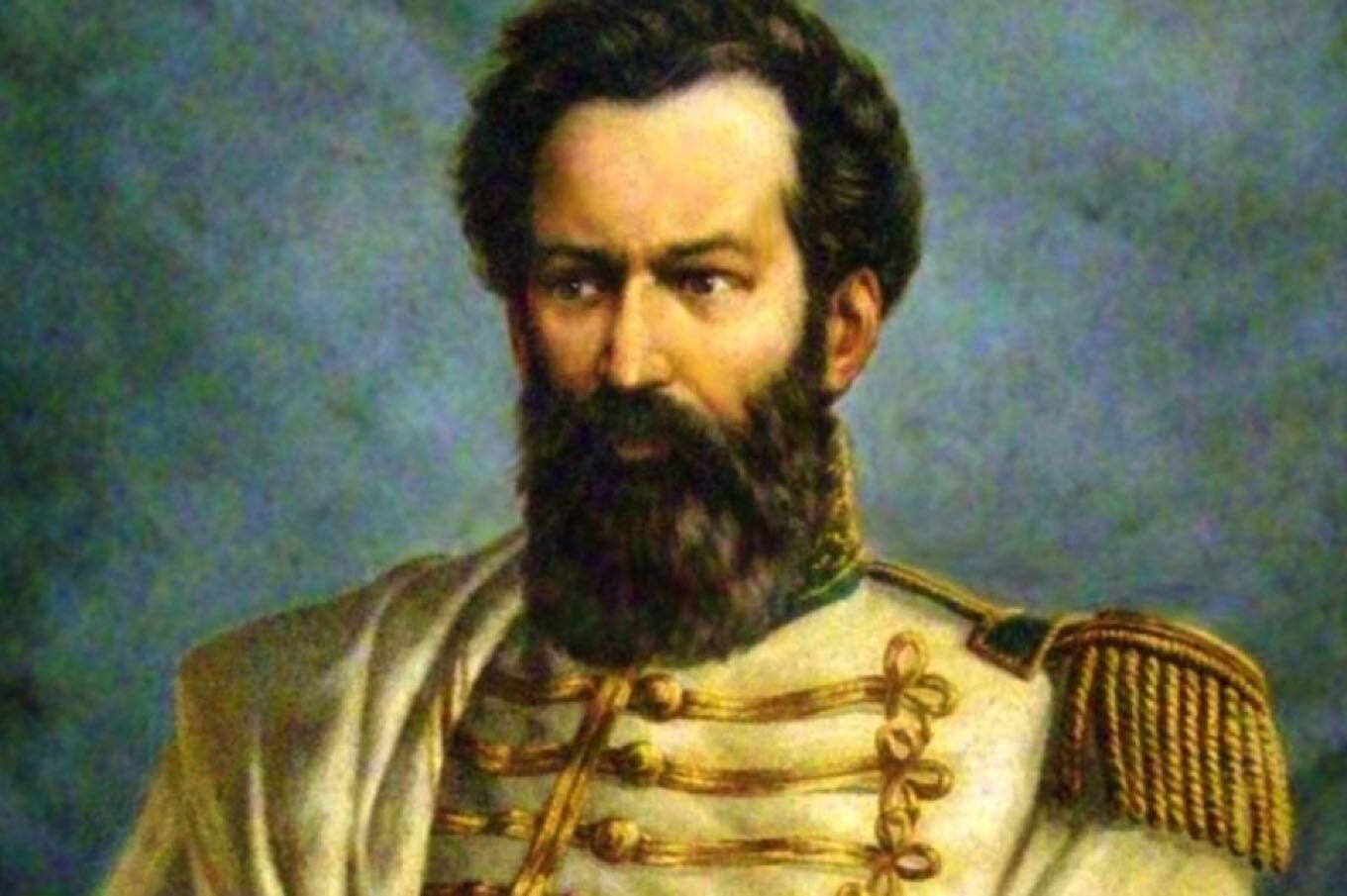
Martín Miguel de Güemes: Argentina's 'Gaucho Hero' of Independence
Translated from Spanish, summarized and contextualized by DistantNews.
At a glance
News
Sources not specified
Outcome reported
- Martín Miguel de Güemes, an Argentine politician and military leader, is commemorated annually on June 17 for his role in the War of Independence.
- He is remembered for leading the "Infernales" gaucho army and protecting Argentine territory against Spanish forces.
- Güemes was born in Salta in 1785, joined the military at 14, and later became the first governor of Salta province.
Argentina annually commemorates General Martín Miguel de Güemes on June 17, honoring the politician and military leader celebrated for his pivotal role in the nation's War of Independence. Güemes is particularly remembered for commanding the "Infernales" gaucho army, whose bravery and strategic prowess were instrumental in defending Argentine territory against Spanish pressures.
Born in Salta in 1785 into an aristocratic family, Güemes began his military career at the young age of 14. His early service included participating in the Reconquista of Buenos Aires under Santiago de Liniers, where he notably led the capture of an English ship. In 1810, he joined the Army of the North in Alto Perú, soon taking leadership of a gaucho squadron and becoming a key figure in the "Guerra Gaucha."
Güemes's military successes, including a victory at the Battle of Suipacha on November 7, 1810, earned him significant recognition and popularity among the gaucho community. This widespread support led to his election as the first governor of Salta province, a position he held until 1821. His strategic brilliance and dedication to halting Spanish incursions in northern Argentina solidified his status as a national hero and a crucial figure in Argentina's path to independence.
The commemoration's origins trace back to June 7, 1821, when Güemes learned of a planned attack on Salta. While en route to confront the threat, he was ambushed and shot in the back. He suffered for ten days before succumbing to his wounds on June 17, 1821, at the age of 36. His legacy as the "gaucho hero" continues to be a source of cultural pride and a symbol of Argentine resilience.
DistantNews Editorial
Originally published by La Nación in Spanish. Translated, summarized, and contextualized by our editorial team with added local perspective. Read our editorial standards.
More Stories


From Our Blog

What Gets Lost (and Found) When News Is Translated

The Critical Role of Diaspora Media in Global News

What Travellers Should Know About Countries with Restricted Press

A Digital Nomad's Guide to Following Local News

How the Same Story Looks Different in Different Countries
