


Mathematicians urge caution, say ‘don’t believe the hype’ on AI capabilities
Translated from English, summarized and contextualized by DistantNews.
At a glance
News
From a news agency
New plan
- Mathematicians are urging caution against overstating artificial intelligence capabilities, particularly in mathematics.
- Over 150 professors signed the "Leiden Declaration," warning governments not to "believe the hype" surrounding AI's reasoning abilities.
- The declaration highlights commercial incentives to exaggerate AI performance and the potential for AI to produce misleading or unverifiable proofs.
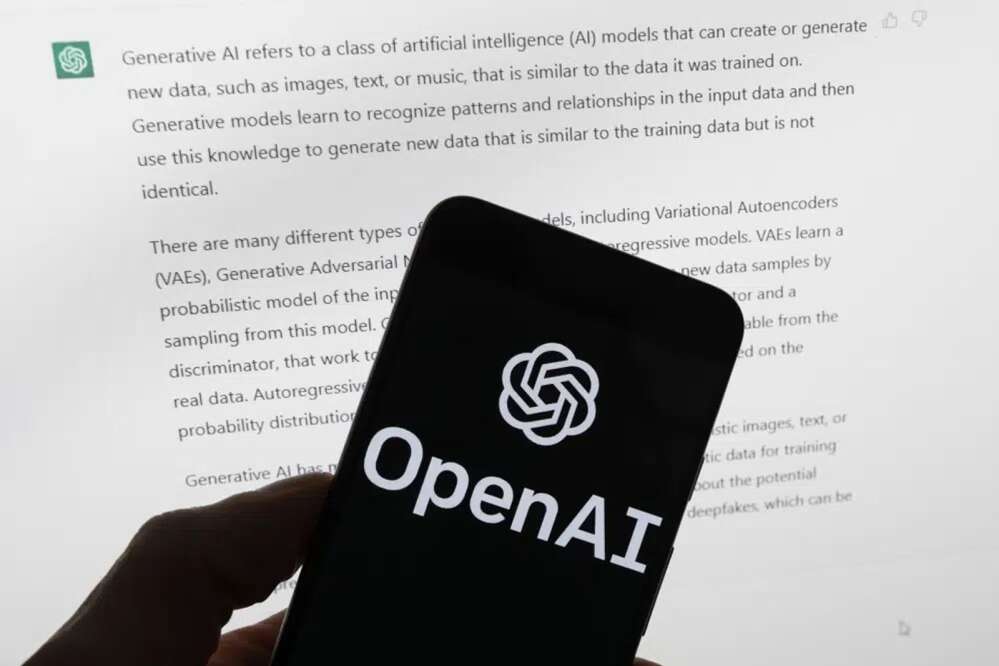
A group of over 150 mathematicians has issued a declaration cautioning against the prevailing hype surrounding artificial intelligence, urging the discipline to resist amplifying claims made by AI developers. The "Leiden Declaration," signed by professors from Europe, Japan, and the US, specifically advises governments against "believing the hype" concerning AI systems' mathematical prowess.
The future of mathematical research must be guided by human judgment, fair and transparent practices, and the shared values of the global mathematical community.
This intervention comes amid increasing claims from AI firms about their systems' advanced capabilities, including successes in international competitions and purported solutions to complex mathematical problems. The declaration acknowledges AI's potential for "new and exciting opportunities" but stresses that "questions that cannot be left unexamined" arise.
AI developers face “a strong commercial incentive… to overstate the capabilities of their products.”
Co-authors of the declaration point to strong commercial incentives driving AI companies to "overstate the capabilities of their products." They note that AI publicity, often released on "market timelines" rather than scientific review schedules, can "misleadingly use specific mathematical tasks as metrics for the general reasoning capacities of commercial models." With significant investor funding at stake, companies are reportedly eager to present AI in the best possible light.
There is a competition to the death on the part of the main labs… they are trying, using mathematics… to attract investment so that each of them will be left standing.
Concerns extend beyond commercial exaggeration. The mathematicians worry that AI systems might generate plausible but incorrect mathematical proofs that are difficult for humans to verify. They also fear that increased reliance on AI could distort research priorities, incentivize bandwagon-chasing, undermine peer review, and potentially place researchers in a subservient role to AI developers, rather than fostering independent inquiry.
The future of mathematical research must be guided by human judgment, fair and transparent practices, and the shared values of the global mathematical community.
DistantNews Editorial
Originally published by Jamaica Observer in English. Translated, summarized, and contextualized by our editorial team with added local perspective. Read our editorial standards.
More Stories

From Our Blog

What Gets Lost (and Found) When News Is Translated

The Critical Role of Diaspora Media in Global News

What Travellers Should Know About Countries with Restricted Press

A Digital Nomad's Guide to Following Local News

How the Same Story Looks Different in Different Countries
