

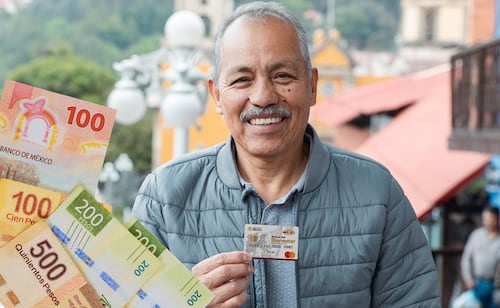

Mathematics overtakes medicine as Mexico’s highest-paid degree
Translated from Spanish and summarized by DistantNews. Read the original for the full story.
At a glance
News
Documents & data
Context piece
- Mathematics ranked as Mexico’s highest-paid degree, with average monthly earnings of 29,887 pesos, overtaking medicine after three years at the top.
- Curriculum design and pedagogy ranked last at 15,934 pesos a month, a gap of about 47% compared with mathematics.
- The IMCO study assessed 65 university degrees and 14 technical careers using income, unemployment, informality, labor risk and education-to-work links.
Mathematics has displaced medicine as Mexico’s best-paid university career. Graduates in the field earn an average of 29,887 pesos a month, according to the Mexican Institute for Competitiveness, or IMCO.
Medicine, which held the top position for the previous three years, now ranks second with average monthly earnings of 27,823 pesos. Finance follows at 27,290 pesos. Architecture, political science, electronics and mechanics, construction and civil engineering, fashion and interior industrial design, educational planning and research, and computer science complete the 10 highest-paid fields.
At the opposite end of the ranking, curriculum design and pedagogy has the lowest average monthly income, at 15,934 pesos. Educational counseling and social work and care follow, with average salaries below 16,300 pesos. The difference between the highest- and lowest-paid careers approaches 14,000 pesos a month, equivalent to a 47% gap.
The IMCO analysis covers labor conditions across 65 university degrees and 14 technical careers. It considers more than income, including unemployment, informal work, occupational risk and the relationship between studies and employment.
The institute warned that similar salaries can conceal very different working conditions. Informality reaches 52% among therapy and rehabilitation professionals, followed by veterinary medicine at 42%, gastronomy and food services at 41%, literature at 39%, and criminology and criminalistics at 38%. Software development and finance have informality rates of 11%, while secondary-school teacher training stands at 12%.
About this summary
Originally published by El Universal in Spanish. Translated, summarized, and contextualized automatically by DistantNews, with a note on how the source frames the story. Not individually reviewed before publishing. How this works.
More Stories

From Our Blog

What Press Freedom Means for the News You Read

News in Translation: What Gets Lost, and How We Keep the Framing

Diaspora Media: How Communities Abroad Follow Home

Traveling Where the Press Is Not Free: How to Read the News There

The Digital Nomad's Guide to Local News
