


Mayors to get powers to overrule local councils on planning decisions
Summarized and contextualized by DistantNews.
At a glance
News
Named sources
New plan
- Mayors across England will gain new powers to override local councils on significant planning decisions for large housing and commercial developments.
- These powers apply to proposals involving over 150 homes, 15,000 square meters of commercial space, or buildings exceeding 30 meters in height.
- The move aims to accelerate housebuilding to meet the government's target of 1.5 million new homes by the end of the decade, though concerns have been raised by some about local councils losing decision-making authority.
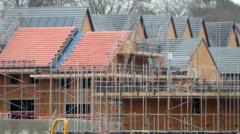
Mayors throughout England are set to receive enhanced authority to overrule local councils on key planning decisions, particularly for large-scale developments. This significant shift in power will affect proposals concerning more than 150 homes, 15,000 square meters of commercial space, or structures exceeding 30 meters in height. Mayors in 13 areas, including major cities like Manchester and Liverpool, will gain these "call-in" powers, mirroring those already held by the Mayor of London.
essential part of the toolkit that mayors need to effectively deliver new homes and regeneration
Housing minister Matthew Pennycook described these new powers as a vital component for mayors to effectively facilitate new housing construction and urban regeneration. However, the Conservative party has voiced concerns, questioning the appropriateness of diminishing councils' ability to make planning decisions within their own communities. The expanded authority will also extend to mayors in various Combined Authorities across North East England, South Yorkshire, West Yorkshire, and other regions.
The government's initiative is closely tied to its pledge to construct 1.5 million new homes in England by 2030. Housebuilders have cautioned that this ambitious target might be missed. Pennycook emphasized the government's firm commitment to this goal, acknowledging its challenging nature but highlighting the urgent need to address the nearly 180,000 children currently in temporary accommodation. In addition to the "call-in" powers, mayors may soon be able to grant "up-front permission," potentially enabling construction to commence without developers needing to submit a separate application.
whether it was right for councils to lose the "ability to make planning decisions in their own communities"
A consultation on the implementation of these new powers is expected next week. The government has stressed that local councils will continue to handle the majority of planning applications, and all decisions must adhere to existing planning rules. Furthermore, mayors are anticipated to have a greater influence over the allocation of housing funds, with national agency Homes England being directed to prioritize mayoral priorities. New Prime Minister Andy Burnham has been a vocal advocate for devolving more power to local mayors, arguing for a reciprocal system where challenges can be made to local decision-making from both mayoral and council perspectives.
Challenge does need to be made to local decision-making and actually it cuts both ways. Sometimes it's the other way round. It's the local authority putting forward something that's unacceptable in terms of the impact on the community. It's a two-way street.
DistantNews Editorial
Originally published by BBC News. Summarized and contextualized by our editorial team with added local perspective. Read our editorial standards.
More Stories



From Our Blog

What Gets Lost (and Found) When News Is Translated

The Critical Role of Diaspora Media in Global News

What Travellers Should Know About Countries with Restricted Press

A Digital Nomad's Guide to Following Local News

How the Same Story Looks Different in Different Countries
