

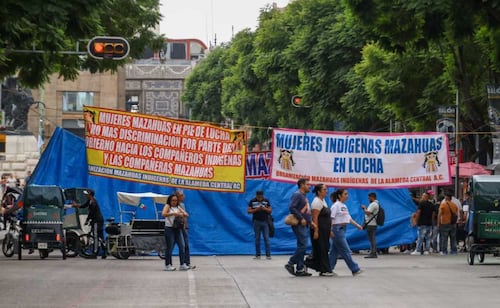
 Image: Karla Guerrero / EL UNIVERSAL
Mazahua Vendors Block Avenida Juárez in Protest Against Alameda Reorganization
Translated from Spanish and summarized by DistantNews. Read the original for the full story.
At a glance
News
Named sources
Ongoing story
- Mazahua vendors from Alameda Central again blocked Avenida Juárez to protest rules for reorganizing the park.
- Protesters displayed signs demanding the right to work and accusing authorities of persecution while traffic remained open only to pedestrians, motorcycles and bicycles.
- Vendors and feminist groups remained present inside and near the park, alongside city security and government personnel.
Mazahua vendors from Mexico City’s Alameda Central again blocked Avenida Juárez to protest the rules governing the park’s reorganization. They had also demonstrated on the avenue the previous day and during the preceding weekend.
The protesters stretched a blue banner across the road near Barrio Chino and placed two tents beneath it. Their signs included “We want to work” and accusations that authorities repress vendors while protecting thieves. Another message addressed Clara and demanded results, rejecting persecution.
We want to work.
The blockade left the route open only to pedestrians, motorcyclists and cyclists. Vendors did not set up tables, barriers or merchandise carts on the road during the latest protest.
They repress those who sell and protect those who steal.
Inside the Alameda, however, vendors remained near the Palacio de Bellas Artes, with an average of six food carts around each fountain or walkway. Feminist groups also occupied areas on Ángela Peralta Street and the park sidewalk beside Avenida Juárez, displaying goods on blankets and protest signs.
Personnel from Mexico City’s Secretariat of Citizen Security and the local Government Secretariat remained in the area as the dispute continued.
Clara, we ask for results, not persecution. We did not vote for you for this.
About this summary
Originally published by El Universal in Spanish. Translated, summarized, and contextualized automatically by DistantNews, with a note on how the source frames the story. Not individually reviewed before publishing. How this works.
More Stories


From Our Blog

What Press Freedom Means for the News You Read

What Gets Lost (and Found) When News Is Translated

The Critical Role of Diaspora Media in Global News

What Travellers Should Know About Countries with Restricted Press

A Digital Nomad's Guide to Following Local News
