


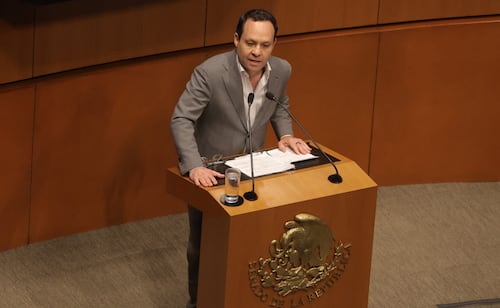
 Image: Gabriel Pano/EL UNIVERSAL
MC rejects opposition alliance with PRI as a party with “no moral authority”; Alito fires back, calling it “Morena’s scab”
Translated from Spanish and summarized by DistantNews. Read the original for the full story.
At a glance
News
Named sources
Context piece
- PRI leader Alejandro Moreno urged PAN and Movimiento Ciudadano to build a broad opposition alliance for the 2027 and 2030 elections.
- Movimiento Ciudadano senator Clemente Castañeda rejected the proposal, saying the PRI lacked the moral authority to make it.
- Moreno accused Movimiento Ciudadano of dividing the opposition vote and helping Morena in future elections.
A proposed opposition alliance in Mexico has quickly turned into a public exchange of insults, after Movimiento Ciudadano rejected the PRI’s call to unite ahead of the 2027 and 2030 elections.
The PRI has no moral authority to call even for a drunken party.
PRI leader Alejandro Moreno had urged the PAN and Movimiento Ciudadano to build a broad alliance against Morena. Clemente Castañeda, Movimiento Ciudadano’s coordinator in the Senate, dismissed the appeal, saying the PRI “has no moral authority to call even for a drunken party.”
Moreno responded by saying that Jorge Álvarez Máynez, the Movimiento Ciudadano leader, was the one who could organize “good drunken parties.” He also accused the orange party of acting as Morena’s “scab” by refusing to join the opposition and splitting the vote in upcoming elections.
They are Morena’s scabs.
Moreno argued that separate PAN, PRI and Movimiento Ciudadano candidates would weaken the opposition. He questioned whether Movimiento Ciudadano could realistically compete and win in states such as Chihuahua, Sinaloa or Sonora, and said its strategy would ultimately benefit Morena.
Would it be intelligent for the opposition to put forward one PAN candidate in Sinaloa, one PRI candidate and one Movimiento Ciudadano candidate?
About this summary
Originally published by El Universal in Spanish. Translated, summarized, and contextualized automatically by DistantNews, with a note on how the source frames the story. Not individually reviewed before publishing. How this works.
More Stories


From Our Blog

What Press Freedom Means for the News You Read

What Gets Lost (and Found) When News Is Translated

The Critical Role of Diaspora Media in Global News

What Travellers Should Know About Countries with Restricted Press

A Digital Nomad's Guide to Following Local News
