


Memorial for Jehovah's Witnesses Persecuted by Nazis Inaugurated in Berlin
Translated from German, summarized and contextualized by DistantNews.
At a glance
News
From a news agency
New plan
- A new memorial for Jehovah's Witnesses persecuted by the Nazi regime was inaugurated in Berlin's Tiergarten.
- The monument honors over 1,800 Jehovah's Witnesses who died under Nazi rule, recognizing their resistance and humanity.
- The inauguration, 81 years after the end of Nazi rule, followed a unanimous Bundestag vote and addressed past prejudices against the religious community.
Berlin's Tiergarten now hosts a memorial dedicated to Jehovah's Witnesses who suffered under the Nazi regime. The monument, inaugurated 81 years after the end of Nazi rule, stands as a testament to their persecution and resistance.
"This memorial is for the people who suffered bitter injustice and yet repeatedly showed humanity," stated Bundestag President Julia Klöckner at the inauguration. The religious community, then known as Bible Students, actively resisted the Nazi system. They refused to give the Hitler salute, abstained from joining party organizations, and aided others facing persecution. The Stiftung «Denkmal für die ermordeten Juden Europas» reports that over 15,000 members were targeted and systematically persecuted, with more than 1,800 losing their lives.
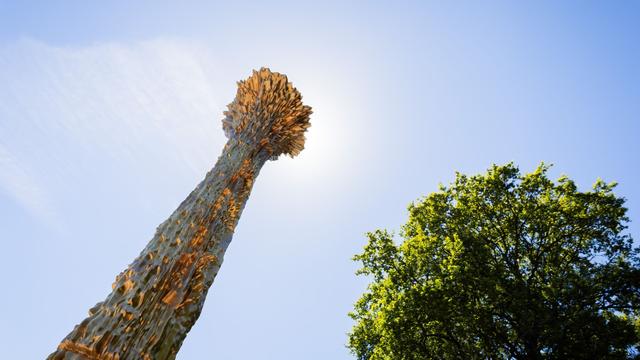
The five-meter-high bronze sculpture, designed by Matthias Leeck, is inspired by a tree with severed branches that remains steadfast. Its location near the Goldfischteich was deliberately chosen. "The Gestapo carried out their arrest operation right here, where 17 brave people subsequently lost their lives directly," explained State Minister for Culture and Media Wolfram Weimer, referencing a historical event where Jehovah's Witnesses secretly exchanged information at a chair rental spot.
Bundestag President Klöckner acknowledged the delay in establishing the memorial, noting that even after the Nazi era, prejudices against religious communities persisted. "Your faith remained foreign and suspect to many people. Your persecution and suffering were seen too little," she said. Weimer added that the memorial fills "a gap in our culture of remembrance." The monument was approved unanimously by the German Bundestag on June 22, 2023, a rare display of consensus on a passionate issue.
DistantNews Editorial
Originally published by Die Zeit in German. Translated, summarized, and contextualized by our editorial team with added local perspective. Read our editorial standards.
More Stories



From Our Blog

What Gets Lost (and Found) When News Is Translated

How the Same Story Looks Different in Different Countries

The Critical Role of Diaspora Media in Global News

What Travellers Should Know About Countries with Restricted Press

A Digital Nomad's Guide to Following Local News
