


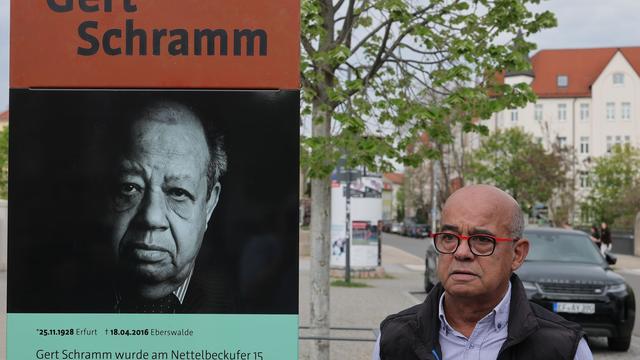
Memorial Stele for KZ Survivor Schramm Unveiled
Translated from German, summarized and contextualized by DistantNews.
TLDR
- Erfurt, Germany, has unveiled a memorial stele honoring Gert Schramm, a survivor of the Buchenwald concentration camp.
- The stele serves as a symbol against racism and fascism, with Schramm's son emphasizing its warning against future atrocities.
- Gert Schramm, whose father was deported to Auschwitz and murdered, faced discrimination and imprisonment due to Nazi racial policies.
Erfurt has taken a significant step in its remembrance culture by dedicating a memorial stele to Gert Schramm, a survivor of the Buchenwald concentration camp. This act, occurring on the tenth anniversary of his passing, underscores the city's commitment to confronting its past and honoring those who endured the horrors of the Nazi regime.
Schramm's son, Bernd Schramm, present for the unveiling, articulated the stele's profound meaning. It stands not only as a tribute to his father and all victims of Nazi terror but also as a stark warning. "It should also be a warning that something like this never happens again," he stated, emphasizing the ongoing relevance of historical memory in preventing future atrocities.
The biography of Gert Schramm, as detailed by Die Zeit, is a harrowing account of racial persecution. Born to an American engineer and a German mother, Schramm faced discrimination from a young age. His arrest by the Gestapo in 1943, due to Nazi racial policies, and subsequent deportation to Buchenwald, where he was one of the few Black prisoners, highlights the pervasive cruelty of the era.
Furthermore, the tragic fate of his father, who was deported to Auschwitz and murdered, adds another layer of profound loss to Schramm's story. The stele in Erfurt serves as a powerful reminder of these individual tragedies and the broader historical context of the Holocaust, ensuring that such injustices are not forgotten and that the lessons learned continue to inform the present.
It should also be a warning that something like this never happens again
DistantNews Editorial
Originally published by Die Zeit in German. Translated, summarized, and contextualized by our editorial team with added local perspective. Read our editorial standards.
More Stories



From Our Blog

What Gets Lost (and Found) When News Is Translated

How the Same Story Looks Different in Different Countries

The Critical Role of Diaspora Media in Global News

What Travellers Should Know About Countries with Restricted Press

A Digital Nomad's Guide to Following Local News
