

Mexican fans least excited for 2026 World Cup, UNAM study explains
Translated from Spanish, summarized and contextualized by DistantNews.
At a glance
News
Sources not specified
Context piece
- Mexican fans show low enthusiasm for the 2026 World Cup, according to a UNAM study.
- Concerns about mobility, cost of living, and unequal economic benefits outweigh excitement.
- The study suggests the tournament's expansion is driven by market logic rather than the sport's essence.
Despite the global excitement surrounding the 2026 World Cup, fans in Mexico's major host cities express a notable lack of enthusiasm. A joint study by the National Autonomous University of Mexico (UNAM) and the University of the Balearic Islands reveals widespread skepticism among residents of Mexico City, Guadalajara, and Monterrey.
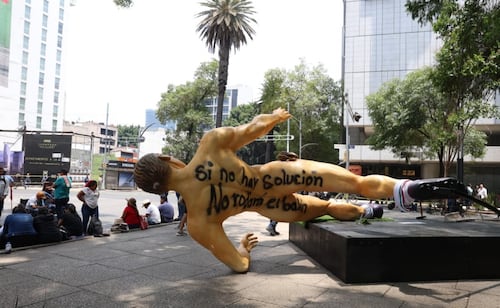
The research, which surveyed 460 individuals, indicates that anticipated negative impacts on daily life, such as increased traffic, rising living costs, and resident displacement, overshadow any potential benefits. The study highlights a significant distrust in institutional transparency regarding public spending and a perception that private interests will be prioritized over local communities.
It functions as a mirror of contemporary urban tensions.
Concerns about mobility, noise pollution, and environmental impact are paramount for citizens. Dr. Ilia Alvarado Sizzo, a researcher at UNAM's Institute of Geography, noted that the tournament acts as a "mirror of contemporary urban tensions," significantly altering mobility, public spaces, tourism, and overall urban dynamics.
Furthermore, experts suggest the tournament's expansion to 48 teams is more a reflection of market demands, television rights, and sports betting than a commitment to the sport's traditional spirit. Luis Alfonso Escudero Gómez of the University of the Balearic Islands pointed to a growing commercialization where economic interests are eclipsing the popular and social dimensions that once characterized the World Cup. The study concludes that the economic benefits often associated with the World Cup do not automatically translate into social well-being for host cities.
The expansion of the competition to 48 teams obeys more the logic of the market, television, and sports betting than the traditional essence of this sport.
DistantNews Editorial
Originally published by El Universal in Spanish. Translated, summarized, and contextualized by our editorial team with added local perspective. Read our editorial standards.
More Stories


From Our Blog

What Press Freedom Means for the News You Read

What Gets Lost (and Found) When News Is Translated

The Critical Role of Diaspora Media in Global News

What Travellers Should Know About Countries with Restricted Press

A Digital Nomad's Guide to Following Local News
