


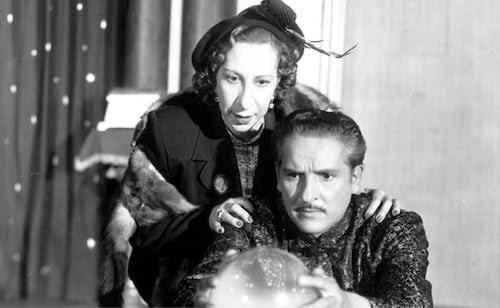
Mexican readings and films on spiritualism you can't miss
Translated from Spanish, summarized and contextualized by DistantNews.
At a glance
In-depth
Named sources
Context piece
- The concept of spiritualism, once explored rationally in the 19th century, is now often mistakenly associated with ghosts and horror films.
- Spiritualism in its historical context was a moral and philosophical movement with Christian foundations, aiming to explain the unseen through a rational, scientific discourse.
- Modern understanding often conflates spiritualism with necromancy and superstition, overshadowing its original intent to rationally explain metaphysical aspects of existence.
The term "spiritualism" today often conjures images of ghosts, dark séances, and horror movies. However, over a century ago, it was viewed as a rational means to explore profound questions about existence that defied easy explanation. Dr. Dulce Adame González discusses how spiritualism became intertwined with magic, superstition, and the paranormal, shaping our current perception.
Adame González highlights a common misconception: "The spiritualism of the 19th century was associated with other practices. For example, necromancy, which holds the possibility of communicating with the dead, is often related to spiritualism, although their purposes are very different." Contrary to popular belief, spiritualism in its era emphasized moral and philosophical aspects, grounded in Christian principles. It sought to explain phenomena connecting the visible and material with the invisible and immaterial through scientific discourse.
Spiritualism, an occult current of the 19th century, has been associated with other types of practices. For example, necromancy, which holds the possibility of communicating with the dead, is often related to spiritualism, although their purposes are very different.
"In its foundations, spiritualism does not seek to relate to ideas of ghosts, the supernatural, and superstitions to feed fears, but to explain these kinds of phenomena rationally and channel them toward a moral end," Adame González explained. She agrees that the supernatural or eccentric aspects have generally received more public dissemination. The researcher also points out the importance of clarifying terms, distinguishing "magic" as a system of knowledge based on analogies and correspondences, from popular magic linked to superstition or circus acts.
This distinction is crucial, as spiritualism's original intent was not to incite fear but to provide a rational framework for understanding the metaphysical. The popularization of its more sensational elements has led to a significant departure from its philosophical and moral underpinnings, leaving many with a skewed understanding of this historical movement.
In its foundations, spiritualism does not seek to relate to ideas of ghosts, the supernatural, and superstitions to feed fears, but to explain these kinds of phenomena rationally and channel them toward a moral end.
DistantNews Editorial
Originally published by El Universal in Spanish. Translated, summarized, and contextualized by our editorial team with added local perspective. Read our editorial standards.
More Stories



From Our Blog

What Press Freedom Means for the News You Read

What Gets Lost (and Found) When News Is Translated

The Critical Role of Diaspora Media in Global News

What Travellers Should Know About Countries with Restricted Press

A Digital Nomad's Guide to Following Local News
