

Mexican regional music's new wave: Young female artists challenge industry barriers
Translated from Spanish and summarized by DistantNews. Read the original for the full story.
At a glance
News
Sources not specified
Context piece
- Young female artists are pushing the boundaries of Mexican regional music, incorporating indie, rock, pop, and folk fusions.
- Despite achieving success and awards, artists like Paloma Morphy and RENEE report facing more industry obstacles than their male counterparts.
- These artists highlight issues such as intense public scrutiny of their appearance and behavior, and the struggle for genuine inclusion in festivals.
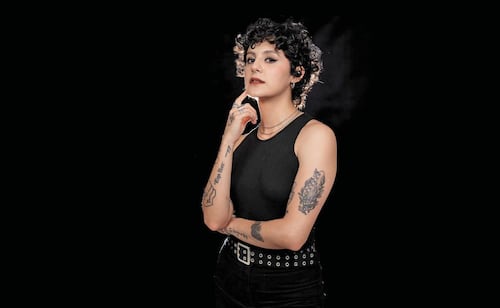
Mexican regional music is experiencing a vibrant evolution, spearheaded by a new generation of young female artists who are infusing the genre with diverse influences. Paloma Morphy, Carín León, RENEE, Xel, and Friné are at the forefront, bringing indie sounds, fusions with rock and pop, and even acoustic renditions to the traditional genre. Their music is reaching new audiences, with performances at venues like the Auditorio BlackBerry and the Auditorio Nacional.
However, these trailblazing artists reveal that their journey is fraught with challenges, particularly due to their gender. Paloma Morphy, a self-declared feminist and Latin Grammy winner, acknowledges that the path for women in the industry is significantly tougher. "The road is a bit harder and more demanding for women in the industry," Morphy stated. "You have to worry about a thousand more things, you get canceled much more strongly, your body is a topic of conversation, how you dress, how you speak, and how you sound; it's much harder and a little scary."
The road is a bit harder and more demanding for women in the industry. You have to worry about a thousand more things, you get canceled much more strongly, your body is a topic of conversation, how you dress, how you speak, and how you sound; it's much harder and a little scary.
RENEE, who blends alternative pop and pop-rock, noted that in her native Monterrey, seeing women dedicated to music was uncommon. Her move to Mexico City opened doors to a more supportive community of female songwriters. Even artists like Friné Alejo, daughter of prominent bassist Luis Fernando Alejo, who has played with bands like Molotov, have experienced differential treatment. "The staff sometimes did not address me, solely because I am a woman," Friné recalled, highlighting a subtle but pervasive bias.
The staff sometimes did not address me, solely because I am a woman.
The artists also question the genuine openness to female-led projects, sharing experiences where inclusion felt like a token gesture rather than authentic support. Xel, who has an opera background and works in alternative music, recounted being invited to festivals as part of a "quota" rather than for her artistic merit. "Like everyone, I have gone through super uncomfortable situations. They invite you just because they want to flirt, with my band in Tijuana they invited us to Women's Day festivals and there were only two projects with girls," she said.
While festivals like Hera are seen as positive steps, artists like Friné believe more systemic change is needed. The current approach, they suggest, risks creating separate, tokenistic spaces for women rather than fully integrating them into the broader music scene.
Like everyone, I have gone through super uncomfortable situations. They invite you just because they want to flirt, with my band in Tijuana they invited us to Women's Day festivals and there were only two projects with girls.
About this summary
Originally published by El Universal in Spanish. Translated, summarized, and contextualized automatically by DistantNews, with a note on how the source frames the story. Not individually reviewed before publishing. How this works.
More Stories

From Our Blog

What Press Freedom Means for the News You Read

What Gets Lost (and Found) When News Is Translated

The Critical Role of Diaspora Media in Global News

What Travellers Should Know About Countries with Restricted Press

A Digital Nomad's Guide to Following Local News
