

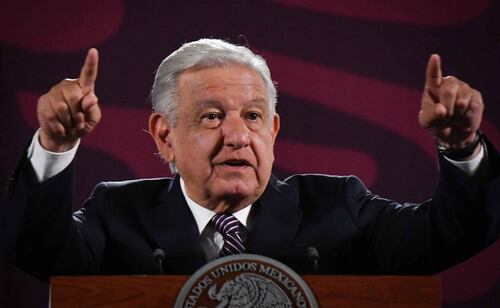
Mexican teachers' union rejects government proposal, demands pension law repeal
Translated from Spanish, summarized and contextualized by DistantNews.
At a glance
News
Sources not specified
Ongoing story
- Mexico's CNTE teachers' union rejected a federal proposal to dissolve the Usicamm system, demanding instead the repeal of the 2007 ISSSTE law.
- The union insists that a dignified pension for state workers requires fundamental changes to the pension system, not just eliminating Usicamm.
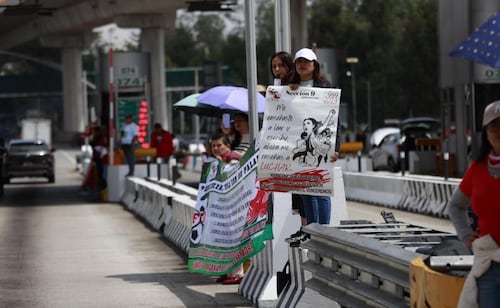
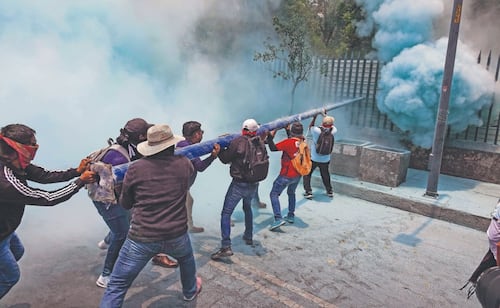
- CNTE continued protests, including freeing toll booths on highways entering Mexico City, to pressure the government for concrete responses.
Mexico's National Union of Education Workers (CNTE) has rejected a federal government proposal to dissolve the Unit of the System for the Career of Teachers and Educators (Usicamm). The union argues that this measure does not address their core demands and has reiterated its primary call for the repeal of the 2007 ISSSTE Law.
"While it is true that Usicamm should certainly be eliminated in educational matters for most states in the country, it is also true that the repeal of the educational reform is not solely eliminating Usicamm, and we have communicated this to the federal government," stated the union's leadership. "But it is also true that at the national level today, the specific demand of the CNTE teaching staff is the repeal of the ISSSTE Law of 2007, for a dignified retirement for all state workers."
The union's National Negotiation Commission met with federal authorities, including the Ministry of the Interior and the Secretariat of Public Education. They asserted that the government's responses did not meet the fundamental demands of the movement, emphasizing that a solution requires deep changes to the state workers' pension system. The CNTE insists that President Claudia Sheinbaum Pardo should lead these negotiations.
CNTE members have continued their protests, including freeing toll booths on highways leading into Mexico City, such as those in Ecatepec, Cuernavaca, and San Marcos on the Mexico-Puebla highway. They deny accusations of extortion, stating that the free passage is a form of protest against toll costs and highway privatization. The union holds the federal government responsible for the national strike, which began on June 1, citing a lack of satisfactory responses to their demands despite previous staggered strikes and protests.
DistantNews Editorial
Originally published by El Universal in Spanish. Translated, summarized, and contextualized by our editorial team with added local perspective. Read our editorial standards.
More Stories


From Our Blog

What Press Freedom Means for the News You Read

What Gets Lost (and Found) When News Is Translated

The Critical Role of Diaspora Media in Global News

What Travellers Should Know About Countries with Restricted Press

A Digital Nomad's Guide to Following Local News
