

Mexico Awaits Fracking Verdict Amid Challenges in Unconventional Gas Extraction
Translated from Spanish, summarized and contextualized by DistantNews.
At a glance
News
Named sources
Ongoing story
- A scientific committee's verdict on the viability of fracking in Mexico is expected soon.
- The evaluation is crucial for the potential exploitation of the country's significant unconventional gas resources.
- Challenges include technical, environmental, and infrastructural factors, with a need for substantial investment in pipelines.
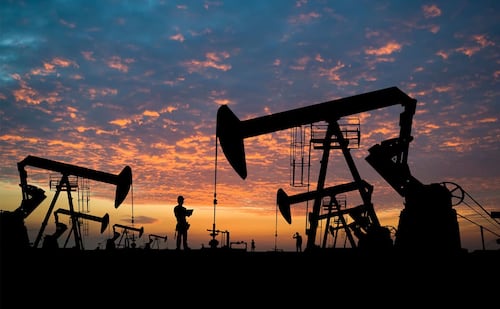
Mexico stands at a potential turning point regarding its unconventional gas reserves, with a scientific committee's assessment on the viability of fracking due in the coming days. President Claudia Sheinbaum confirmed the committee will present its findings soon, reopening the debate on extracting this resource. Fracking, or hydraulic fracturing, is the technique used to access unconventional gas trapped in rock formations, a process more complex than traditional gas extraction. Mexico possesses substantial reserves, estimated by the U.S. Energy Information Administration at around 545 trillion cubic feet, placing it among the top six countries globally. However, accessing these resources presents significant hurdles. "Mexico has basins with high potential to strengthen its energy security, but lacks the infrastructure to integrate them into the system," warns energy advisor Ramsés Pech. He emphasizes that without structural investments, Mexico will continue importing gas despite its domestic potential. The development of unconventional gas could bolster Mexico's energy supply, which currently relies heavily on natural gas, accounting for about 45.5 percent of its primary energy. The infrastructure required extends beyond extraction, necessitating collection systems, processing plants, compression stations, and regional pipelines. Pech notes that while some basins like Burgos have existing pipeline connectivity, others, such as Sabinas-Burro Picachos and Tampico-Misantla, face major limitations. The current pipeline network was designed for declining conventional gas and imports, not for large-scale production.
Mexico has basins with high potential to strengthen its energy security, but lacks the infrastructure to integrate them into the system
The committee's upcoming verdict could significantly influence Mexico's energy policy, determining whether the country can leverage its vast underground resources or remains dependent on imports. The technical, environmental, and infrastructural complexities mean that even with a positive assessment, substantial investment and strategic planning will be essential to unlock the potential of unconventional gas.
While not structural investments are made, the country will continue to import gas, even having significant resources in its own territory
DistantNews Editorial
Originally published by El Universal in Spanish. Translated, summarized, and contextualized by our editorial team with added local perspective. Read our editorial standards.
More Stories
From Our Blog

What Press Freedom Means for the News You Read

What Gets Lost (and Found) When News Is Translated

The Critical Role of Diaspora Media in Global News

What Travellers Should Know About Countries with Restricted Press

A Digital Nomad's Guide to Following Local News
