


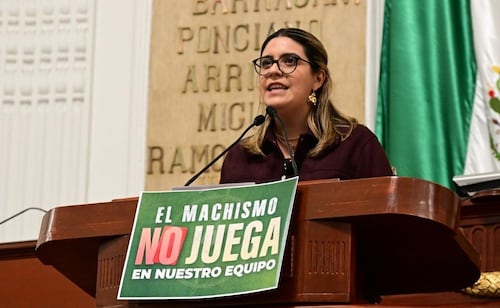
 Image: Especial.
Mexico City Congress urges action against online hate speech
Translated from Spanish and summarized by DistantNews. Read the original for the full story.
At a glance
News
Named sources
New plan
- The Congress of Mexico City has urged the Secretariat for Women and Copred to act against hate speech and gender-based digital violence on online platforms.
- The call follows inappropriate and offensive comments made on the "Pláticas del Mal" podcast targeting female players of the Cruz Azul soccer team after a 10-0 loss.
- A deputy argued that criticizing women for their performance, rather than their skills, constitutes misogyny and political violence, and that freedom of expression has limits regarding dignity and non-discrimination.
Lawmakers in Mexico City are calling for stronger measures against online hate speech and gender-based digital violence. The Permanent Commission of the Congress of the City of Mexico has urged the Secretariat for Women and the Council for the Prevention and Elimination of Discrimination (Copred) to implement preventive actions and sanctions on digital platforms and social media.
This push comes after recent comments made on the podcast "Pláticas del Mal." Local Morena party deputy Cecilia Vadillo highlighted that commentators used a 10-0 loss by the Cruz Azul women's soccer team as a pretext to insult, denigrate, sexualize, and question the players' right to be on the field. Vadillo noted that while men's performance is critiqued, women are often attacked for their very presence, labeling it misogyny and political violence.
Vadillo emphasized the harmful impact of normalized hate speech, stating that it has a multiplying effect, legitimizes abusive behavior, and discourages young girls from pursuing sports. She affirmed that freedom of expression, while a protected right, is not absolute and must respect the dignity, freedom, and non-discrimination of others, citing constitutional and legal frameworks that recognize digital violence against women.
About this summary
Originally published by El Universal in Spanish. Translated, summarized, and contextualized automatically by DistantNews, with a note on how the source frames the story. Not individually reviewed before publishing. How this works.
More Stories

From Our Blog

What Press Freedom Means for the News You Read

What Gets Lost (and Found) When News Is Translated

The Critical Role of Diaspora Media in Global News

What Travellers Should Know About Countries with Restricted Press

A Digital Nomad's Guide to Following Local News
