


Mexico Congress Approves Judicial Reform, Election Nullification for Foreign Interference
Translated from Spanish, summarized and contextualized by DistantNews.
At a glance
News
Sources not specified
New plan
- Mexico's Congress declared two reforms constitutional: one on judicial appointments and another on nullifying elections due to foreign interference.
- The judicial reform postpones a judge selection process to 2028 and allows for the reelection of Supreme Court and Electoral Tribunal magistrates.
- The election reform introduces foreign interference as a cause for nullifying results, with both decrees awaiting publication in the Official Gazette.
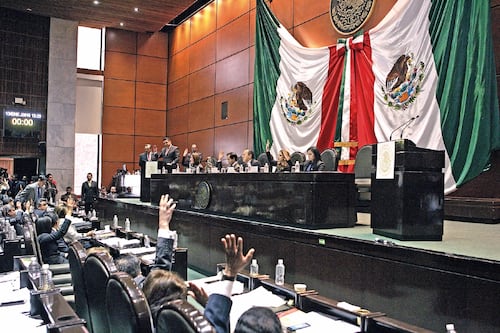
Mexico's Congress has officially declared the constitutionality of two significant reforms, solidifying changes to the judicial system and election integrity. The Comisión Permanente, the standing committee of Congress, confirmed that both measures have secured the necessary backing from a majority of state legislatures, as required by Article 135 of the constitution.
The first reform addresses the judiciary, primarily by postponing the second phase of judge selections from 2027 to June 2028. This adjustment also establishes new sections within the Supreme Court of Justice of the Nation. Crucially, it allows for the potential reelection of magistrates serving on the Superior Chamber of the Electoral Tribunal of the Judicial Power of the Federation (TEPJF) for an additional six-year term.
The second reform introduces a stringent measure against foreign influence in elections. It establishes foreign interference as a valid ground for annulling election results. This amendment, which has garnered approval from 25 local legislatures, aims to safeguard the electoral process from external meddling.
During the session, opposition legislators staged a protest, turning their backs to the tribune as the constitutional declarations were made. The president of the Board of Directors, Laura Itzel Castillo, formally announced the approval of both decrees, citing the supportive votes from numerous states including Baja California, Chiapas, Mexico City, and Veracruz. Both decrees are now slated for publication in the Diario Oficial de la Federación.
DistantNews Editorial
Originally published by El Universal in Spanish. Translated, summarized, and contextualized by our editorial team with added local perspective. Read our editorial standards.
More Stories

From Our Blog

What Press Freedom Means for the News You Read

What Gets Lost (and Found) When News Is Translated

The Critical Role of Diaspora Media in Global News

What Travellers Should Know About Countries with Restricted Press

A Digital Nomad's Guide to Following Local News
