


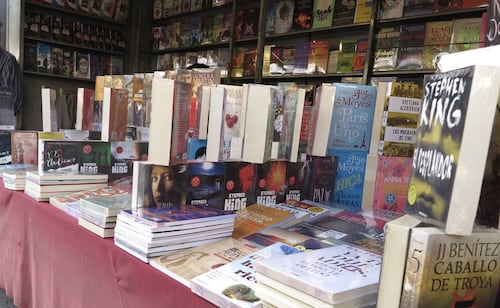
Mexico lawmakers demand probe into "book bootlegging" amid piracy surge
Translated from Spanish, summarized and contextualized by DistantNews.
At a glance
News
Named sources
Context piece
- Mexican lawmakers are demanding an investigation into widespread book piracy, which they say is costing the publishing industry billions of pesos.
- Pirated books are estimated to account for half of all books sold in Mexico, with organized crime groups involved in the illicit trade.
- Lawmakers warn that the proliferation of fake books poses a risk to professional training and the quality of education.
Lawmakers in Mexico's Chamber of Deputies are calling for a thorough investigation into what they've termed "book bootlegging," a widespread piracy operation that is significantly impacting the publishing industry. The PAN parliamentary group has urged the Secretariat of Public Education (SEP), the Mexican Institute of Industrial Property (IMPI), and the Attorney General's Office (FGR) to launch a probe.
Recent reports indicate that book piracy in Mexico generates up to 19 billion pesos in illicit profits. It's estimated that five out of every 10 books available for sale are pirated copies. Daniel Chimal García, a federal deputy from the PAN, highlighted that this issue was identified by the Mexican Center for the Protection and Promotion of Copyright (CEMPRO) and the National Chamber of the Publishing Industry (CANIEM). He noted that organized crime has infiltrated the book piracy industry to secure additional illicit funds.
With pirated books, there is a risk to professional training under erroneous editorials.
Chimal García expressed concern that while Mexico faces challenges in promoting reading habits, the presence of pirated books introduces a new risk. "With pirated books, there is a risk to professional training under erroneous editorials," he stated. He pointed out that the industry is vulnerable due to the cloning of pages, theft from authors, and individuals evading taxes by reproducing books without permission. The deputy mentioned that book piracy accounts for over 50% of publishers' losses and is a profitable business because pirated books are offered at a much lower price than the official cost set by authors or publishing houses.
CEMPRO and CANIEM have identified key storage and distribution hubs for this illegal trade, primarily in warehouses in Mexico City's Zócalo, Iztapalapa, Ciudad Neza, and Naucalpan. The network extends to clandestine points of sale in states like Veracruz, Oaxaca, Michoacán, and Jalisco, which are also significant markets influenced by criminal activities. Piracy in Mexico has reportedly increased by 15-20% in recent years, with corruption at various government levels allegedly contributing to a lack of sanctions and disruption of the criminal networks.
The book crime steals more than 50 percent of the publishers and is a profitable business because they offer books at a much lower cost than the true one imposed by the author or the publishing house.
DistantNews Editorial
Originally published by El Universal in Spanish. Translated, summarized, and contextualized by our editorial team with added local perspective. Read our editorial standards.
More Stories



From Our Blog

What Press Freedom Means for the News You Read

What Gets Lost (and Found) When News Is Translated

The Critical Role of Diaspora Media in Global News

What Travellers Should Know About Countries with Restricted Press

A Digital Nomad's Guide to Following Local News
