


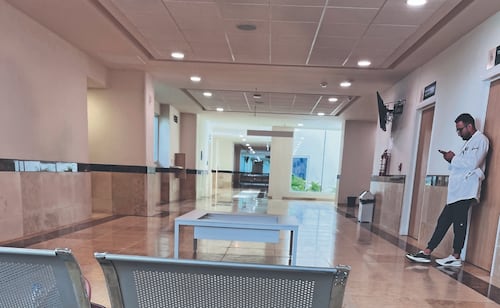
Mexico proposes medical negligence reform for 'contextual justice' in investigations
Translated from Spanish, summarized and contextualized by DistantNews.
At a glance
News
Named sources
New plan
- A proposed reform in Mexico aims to ensure investigations into alleged medical negligence are conducted with technical precision and contextual justice.
- The initiative seeks to train public prosecutors and judicial staff on health law, bioethics, and risk management.
- It proposes considering resource limitations in medical units as evidence, shifting towards shared responsibility and protecting medical professionals from undue penal consequences.
Mexican legislator Noemí Berenice Luna Ayala has proposed reforms to the General Health Law, seeking to introduce "contextual justice" into investigations of alleged medical negligence. The initiative, now before the Health Commission, aims to ensure that technical accuracy and operational realities guide these sensitive inquiries.
The proposal mandates that the Ministry of Health, in collaboration with relevant authorities, will promote continuous training for public prosecutors and judicial personnel. This training will focus on health law, bioethics, and institutional risk management. The goal is to ensure that professional responsibility is assessed based on sound technical criteria and the actual operating conditions within medical facilities.
A key aspect of the reform is the consideration of insufficient human or material resources in a medical unit as potential evidence. This would apply when a medical professional has acted with the available means. The initiative argues that the "criminalization of medical acts" has led to "defensive medicine," where staff prioritize legal documentation over clinical efficiency, often ordering excessive tests or avoiding high-risk procedures due to fear of legal repercussions.
This defensive practice, the proposal states, inflates healthcare costs, strains services, and dehumanizes the doctor-patient relationship by turning emergency rooms into potential litigation sites. Deputy Luna Ayala asserts that protecting professionals against failures stemming from structural deficiencies is not a special privilege but a public efficiency measure. It aims to guarantee patient-centered care, free from the fear of prosecution.
The reform seeks to update the law so that investigations consider the real availability of supplies and workload through comprehensive expert assessments. This approach would move towards a model of shared responsibility, grounding legal truth in the material reality of hospitals. Ultimately, the objective is to restore legal security for medical professionals, ensuring that institutional shortcomings do not result in penal sentences.
La iniciativa, turnada a la Comisión de Salud, plantea que la Secretaría de Salud, en coordinación con las autoridades competentes, promoverá la capacitación permanente de los agentes del Ministerio Público y personal judicial en materia de Derecho Sanitario, Bioética y Gestión de Riesgos Institucionales, a fin de asegurar que la valoración de la responsabilidad profesional se realice bajo criterios técnicos y de realidad operativa.
DistantNews Editorial
Originally published by El Universal in Spanish. Translated, summarized, and contextualized by our editorial team with added local perspective. Read our editorial standards.
More Stories



From Our Blog

What Press Freedom Means for the News You Read

What Gets Lost (and Found) When News Is Translated

The Critical Role of Diaspora Media in Global News

What Travellers Should Know About Countries with Restricted Press

A Digital Nomad's Guide to Following Local News
