


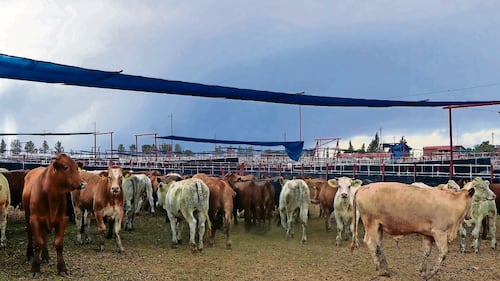
Mexico resumes cattle exports to U.S. amid screwworm concerns
Translated from Spanish, summarized and contextualized by DistantNews.
At a glance
News
Named sources
New plan
- Mexico has resumed cattle exports to the U.S. after a ban imposed due to the screwworm pest.
- The U.S. had imposed the ban to prevent the pest from reaching its herds, but cases have since been detected in Texas and New Mexico.
- New protocols will regulate the flow of Mexican cattle, with daily limits gradually increasing.
Mexican cattle ranchers are resuming exports to the United States following the lifting of a ban that had significantly impacted the lucrative cross-border meat industry. The prohibition was initially put in place by Washington to prevent the spread of the screwworm pest to U.S. herds. However, the screwworm, a parasitic larva of the Cochliomyia hominivorax fly, has since been detected in several U.S. states, including Texas and New Mexico. The pest infects open wounds and bodily orifices of warm-blooded animals, including humans, causing progressively deeper and more painful lesions. The infestation has spread across 30 of Mexico's 32 states since arriving in November 2024. Despite the ongoing presence of the pest, Mexico has reported a progressive containment, with active cases representing less than half of those seen a year ago. Nonetheless, eradication is expected to be a long process. Ranchers like Martín Alfonso Ibarra in Sonora are preparing to resume exports starting August 24, crossing the border from Agua Prieta to Douglas, Arizona. New U.S. protocols will govern the entry of Mexican cattle, aiming to manage the risk while facilitating trade. Initially, only 700 head will be allowed per day, increasing to 900 in the second week, and progressively up to 1,300 daily. This phased approach seeks to balance sanitary concerns with the recovery of the U.S. cattle herd, which is at a 75-year low and facing a deficit impacting beef prices.
The movie isn't over yet.
DistantNews Editorial
Originally published by El Universal in Spanish. Translated, summarized, and contextualized by our editorial team with added local perspective. Read our editorial standards.
More Stories
From Our Blog

What Press Freedom Means for the News You Read

What Gets Lost (and Found) When News Is Translated

The Critical Role of Diaspora Media in Global News

What Travellers Should Know About Countries with Restricted Press

A Digital Nomad's Guide to Following Local News
