

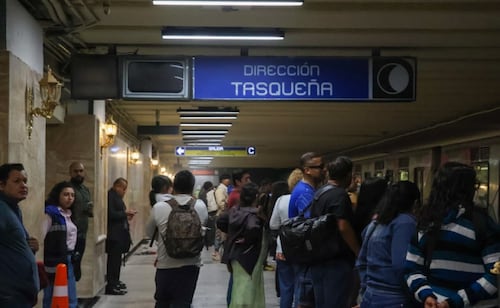

Mexico's Interoceanic Train to undergo route changes after fatal accident
Translated from Spanish, summarized and contextualized by DistantNews.
At a glance
News
Named sources
Ongoing story
- Mexican President Claudia Sheinbaum announced plans to invest in rerouting sections of the Interoceanic Train, particularly sharp curves.
- The train is currently operating for cargo but not for passengers following a fatal December 28 accident.
- The government awaits safety recommendations from TÜV Rheinland before resuming passenger service, expected in two to three weeks.
Mexican President Claudia Sheinbaum announced that the government will invest in altering the routes of the Interoceanic Train within three weeks, focusing on areas with sharp curves. This decision follows a serious accident on December 28 in Oaxaca, which resulted in 14 fatalities and approximately 100 injuries. Currently, the train is operational for cargo transport but has been suspended for passenger service due to safety concerns. Sheinbaum stated that the federal government is awaiting safety recommendations for passenger operations from the company TÜV Rheinland before implementing changes and rehabilitation work on certain sections of the line. The planned rerouting aims to avoid problematic sections, including an area known as "orejas de conejo" (rabbit ears) near the site of the previous accident, to enhance safety by eliminating steep curves. The president anticipates that information regarding the resumption of passenger service will be available in two to three weeks. Sheinbaum reiterated that the December accident was attributed to a technical failure and confirmed that the federal government provided comprehensive support and compensation to all affected families. Earlier, in April, the Attorney General's Office reported that inspections confirmed the track and locomotives at the accident site met applicable standards. The investigation had identified the train driver and dispatcher as allegedly responsible for the deaths and injuries, though they were later released.
DistantNews Editorial
Originally published by El Universal in Spanish. Translated, summarized, and contextualized by our editorial team with added local perspective. Read our editorial standards.
More Stories


From Our Blog

What Press Freedom Means for the News You Read

What Gets Lost (and Found) When News Is Translated

The Critical Role of Diaspora Media in Global News

What Travellers Should Know About Countries with Restricted Press

A Digital Nomad's Guide to Following Local News
