

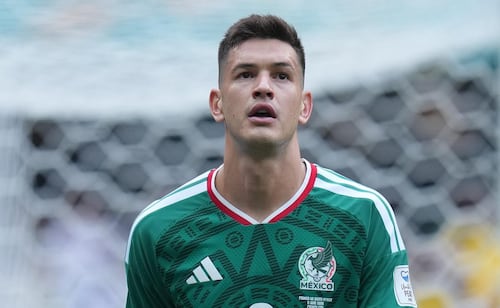
Mexico's Montes suspended for South Korea match; Aguirre ponders defensive options
Translated from Spanish, summarized and contextualized by DistantNews.
At a glance
News
Sources not specified
Ongoing story
- Mexico's national soccer team must replace César Montes for their next World Cup 2026 match against South Korea after his red card against South Africa.
- Coach Javier Aguirre has three potential replacements, with Edson Álvarez, a natural midfielder, being the most likely choice to play center-back.
- Other options include using versatile player Israel Reyes or Luis Romo in defense, testing Aguirre's claim that the squad is ready for any situation.
The Mexican national soccer team faces a defensive dilemma heading into their second match of the 2026 World Cup against South Korea. César Montes received a red card in the final minutes of their game against South Africa, forcing coach Javier "Vasco" Aguirre to find a new center-back.
Aguirre has several options to fill the void. The most probable solution is to move Edson Álvarez, the team's captain and a natural midfielder, to the center-back position. Álvarez has experience playing there, having done so during his early career with Club América and previously under Aguirre's guidance.
Vasco will have to move his pieces for the next commitment in the Guadalajara stadium against the South Korean national team.
Another possibility is to deploy Israel Reyes, a versatile player who can cover multiple defensive positions. If Reyes moves to center-back, Jorge Sánchez would likely take over at right-back. Alternatively, Aguirre could consider Luis Romo, a midfielder for Chivas, who has also played center-back since his debut with Querétaro.
Aguirre has previously stated that his squad is prepared for any eventuality. The upcoming match against South Korea will be a test of that readiness, requiring him to strategically adjust his lineup to maintain defensive solidity.
Javier Aguirre has boasted that his squad is ready for any eventuality and function that falls to them on and off the field. Now is the time to prove it is real.
DistantNews Editorial
Originally published by El Universal in Spanish. Translated, summarized, and contextualized by our editorial team with added local perspective. Read our editorial standards.
More Stories
From Our Blog

What Press Freedom Means for the News You Read

What Gets Lost (and Found) When News Is Translated

The Critical Role of Diaspora Media in Global News

What Travellers Should Know About Countries with Restricted Press

A Digital Nomad's Guide to Following Local News
