


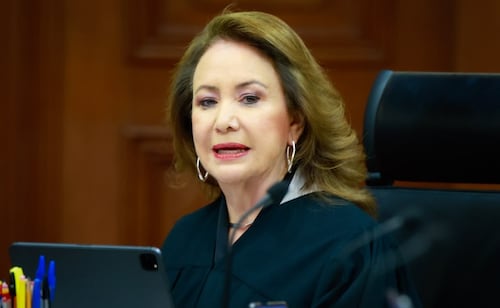
Mexico's Supreme Court reviews proposal to remove 'honest living' and degree age requirements for public office
Translated from Spanish, summarized and contextualized by DistantNews.
At a glance
News
Sources not specified
Context piece
- Mexico's Supreme Court of Justice (SCJN) is considering a proposal to remove requirements for public office, including "honest living" and a five-year-old university degree.
- The proposal, put forth by Minister Yasmín Esquivel Mossa, argues these requirements are ambiguous and can exclude qualified candidates, particularly those from indigenous and Afro-Mexican communities.
- The SCJN's review aims to ensure public office requirements are constitutional, non-discriminatory, and relevant to job functions.
Mexico's Supreme Court of Justice (SCJN) is reviewing a proposal that could invalidate stringent requirements for public office, including the "honest living" standard and a mandate for a university degree held for at least five years. Minister Yasmín Esquivel Mossa put forward the proposal, arguing that the "honest living" criterion is vague and subject to subjective interpretation, potentially barring individuals from public service based on arbitrary assessments.
Esquivel Mossa also contended that the requirement for a university degree of a certain age can disproportionately exclude individuals who have faced historical barriers to higher education. These individuals, she noted, may possess significant community experience, contextual knowledge, and a proven track record in advocating for the rights of indigenous and Afro-Mexican peoples, making them valuable candidates despite not meeting the traditional educational prerequisites.
The SCJN is evaluating the constitutionality of these requirements, specifically their compatibility with equality and non-discrimination rights, access to public office, and the participation of indigenous and Afro-Mexican communities. The court's ultimate decision aims to ensure that the criteria for holding public office are not only constitutional but also genuinely related to the responsibilities of the position, without serving as barriers to exclusion or discrimination.
This review is part of a broader effort to make public service more accessible and representative. By challenging ambiguous and potentially discriminatory requirements, the SCJN seeks to promote a more inclusive public sector that reflects the diverse experiences and expertise within Mexican society, particularly among historically marginalized groups.
DistantNews Editorial
Originally published by El Universal in Spanish. Translated, summarized, and contextualized by our editorial team with added local perspective. Read our editorial standards.
More Stories


From Our Blog

What Press Freedom Means for the News You Read

What Gets Lost (and Found) When News Is Translated

The Critical Role of Diaspora Media in Global News

What Travellers Should Know About Countries with Restricted Press

A Digital Nomad's Guide to Following Local News
