


Mexico teachers' union to free toll booths amid ongoing protests
Translated from Spanish, summarized and contextualized by DistantNews.
At a glance
News
Sources not specified
Ongoing story
- The CNTE teachers' union will allow toll booths to operate freely on Thursday in Mexico City and several states.
- This action follows a breakdown in dialogue between the union and government officials on Wednesday.
- The union continues to demand the repeal of the 2007 ISSSTE law, pension improvements, and other labor rights.
Mexico's National Union of Education Workers (CNTE) has announced a temporary de-escalation of its protests, agreeing to allow toll booths to operate freely on Thursday. This decision comes after a round of dialogue talks between union leaders and officials from the Ministry of the Interior and the Ministry of Public Education concluded without satisfactory agreements.
CNTE representatives stated that the government's response to their demands was insufficient, prompting the continuation of their protest actions. On Wednesday, union contingents organized simultaneous demonstrations at the Ministry of Public Education (SEP), the ISSSTE social security institute, and the Ministry of the Interior in Mexico City. These protests led to traffic blockages and disruptions to various services, with some federal buildings sustaining damage.
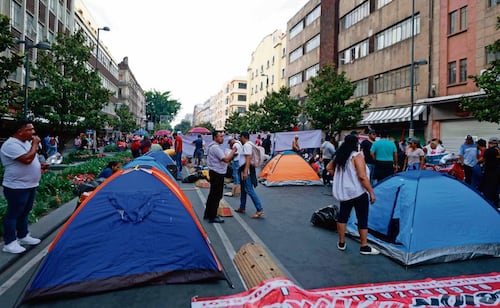
The current wave of actions is part of an indefinite national strike initiated by the CNTE. The union has intensified its pressure tactics in recent days, employing marches, blockages, sit-ins, and the occupation of facilities in the capital and other regions. The core demands of the movement include the repeal of the 2007 ISSSTE law, significant improvements to the pension system, and the resolution of various labor grievances affecting dissenting teachers.
Specifically for Thursday, the CNTE agreed to open toll plazas at key entry and exit points of Mexico City and in various states. The National Union's Negotiation Commission is scheduled to meet again with the Ministry of the Interior at 10:00 AM. Notable toll plazas to be opened include San Marcos, managed by Oaxaca's Section XXII, and La Venta, involving sections from Chiapas, Michoacán, and Zacatecas.
DistantNews Editorial
Originally published by El Universal in Spanish. Translated, summarized, and contextualized by our editorial team with added local perspective. Read our editorial standards.
More Stories



From Our Blog

What Press Freedom Means for the News You Read

What Gets Lost (and Found) When News Is Translated

The Critical Role of Diaspora Media in Global News

What Travellers Should Know About Countries with Restricted Press

A Digital Nomad's Guide to Following Local News
