


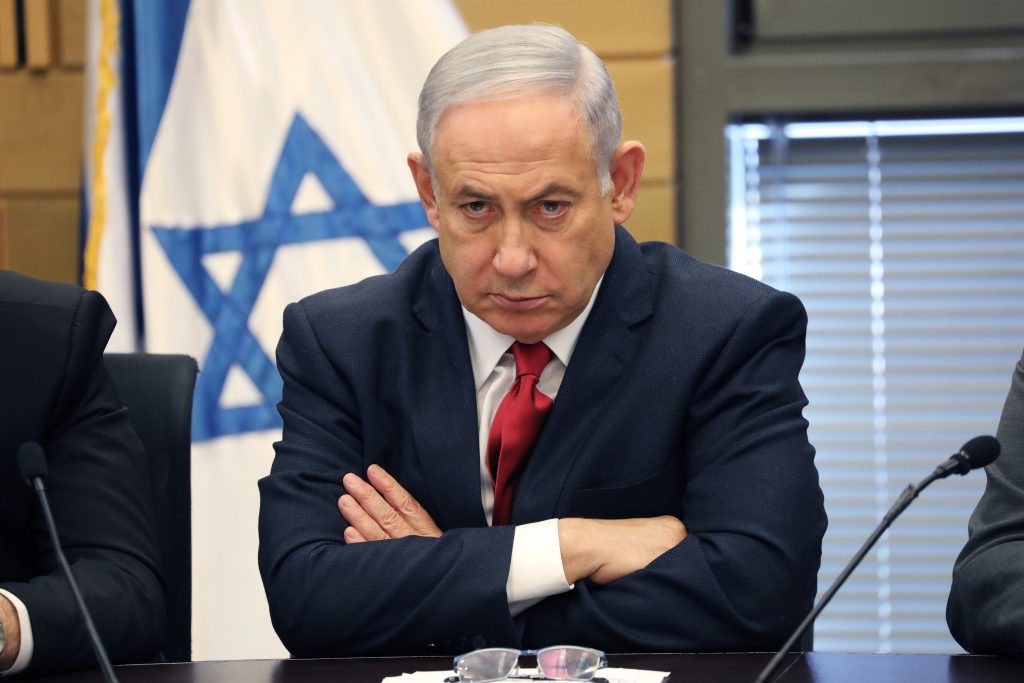
Middle East: Ceasefire in tatters as Netanyahu wants 70% of Gaza
Translated from French, summarized and contextualized by DistantNews.
At a glance
News
Sources not specified
Ongoing story
- Israeli Prime Minister Netanyahu announced plans to expand Israeli control over Gaza to 70% of the territory, disregarding the existing ceasefire.
- The Israeli military confirmed the killing of a Hamas military chief in Gaza, while Israel also struck a Beirut suburb, targeting a commander in Iran's Revolutionary Guard.
- Global markets reacted nervously to the escalating tensions, with the ceasefire appearing increasingly fragile.
Tensions escalated across multiple fronts on Thursday, May 28, as Israeli Prime Minister Benjamin Netanyahu declared his intention to increase Israeli territorial control in Gaza to 70%, a move that sidesteps the existing ceasefire agreement. This declaration came as Israel conducted strikes in Beirut for the second time since April's truce, and Iran faced new U.S. strikes while also targeting Kuwait. Global markets showed signs of unease, underscoring the increasingly precarious state of the ceasefire.
In this moment, we have Hamas by the throat. We now control 60% of the territory of the strip. You know, we were at 50 after the ceasefire came into effect, we went up to 60, my directive is to go up to 70
Netanyahu's statement, made during a conference in the occupied West Bank and broadcast by Israeli Channel 12, instructed the army to expand its territorial grip on Gaza beyond the terms of the October ceasefire. "We control now 60% of the territory of the strip. You know, we were at 50 after the ceasefire came into effect, we went up to 60, my directive is to go up to 70," he stated. This move suggests the truce has served as a cover for a methodical military expansion rather than a cessation of hostilities. Concurrently, the Israeli military confirmed the death of Mohammed Odeh, identified as the new head of Hamas's armed wing, following a strike in Gaza the previous day.
commander of the rocket unit within a regiment of the brigade al-Qods of the Iranian Revolutionary Guard
In Beirut, Israeli aircraft struck an apartment in Choueifat, a southern suburb, marking the second such attack since the April 17 ceasefire. Israeli Channel 15 reported the target was Ali Husseini, described as a "commander of the rocket unit within a regiment of the al-Qods brigade of the Iranian Revolutionary Guard." However, the Israeli army's radio expressed "doubts" about the operation's success. Spokesperson Avichay Adraee confirmed precise strikes in the Beirut region without further details. Lebanese Red Cross Secretary-General Georges Kettaneh stated the strike targeted a "residential apartment," with rescue teams continuing operations without a confirmed casualty count.
had struck precisely in the Beirut region
According to our correspondent in Beirut, Paul Khalifeh, the strike represents an "escalation," demonstrating that the southern suburbs of Beirut remain "in the crosshairs of the Israeli army, despite the theoretically ongoing truce." Lebanese political and security sources suggest that the United States may have authorized targeted strikes against Hezbollah leaders while vetoing large-scale bombings, such as those on April 8, which resulted in over 250 deaths. Official Lebanese sources indicate that President Trump had warned Netanyahu against images of residential buildings reduced to rubble in the Lebanese capital.
is indeed an escalation
DistantNews Editorial
Originally published by El Watan in French. Translated, summarized, and contextualized by our editorial team with added local perspective. Read our editorial standards.
More Stories



From Our Blog

What Gets Lost (and Found) When News Is Translated

The Critical Role of Diaspora Media in Global News

What Travellers Should Know About Countries with Restricted Press

A Digital Nomad's Guide to Following Local News

How the Same Story Looks Different in Different Countries
