

Middle East Cost Shock Hits Korean SMEs, Small Businesses Suffer Most
Translated from Korean, summarized and contextualized by DistantNews.
At a glance
News
Documents & data
Context piece
- Korean small and medium-sized enterprises (SMEs), particularly those with fewer than 9 employees, are facing significant financial strain due to prolonged geopolitical risks impacting raw material, energy, and logistics costs.
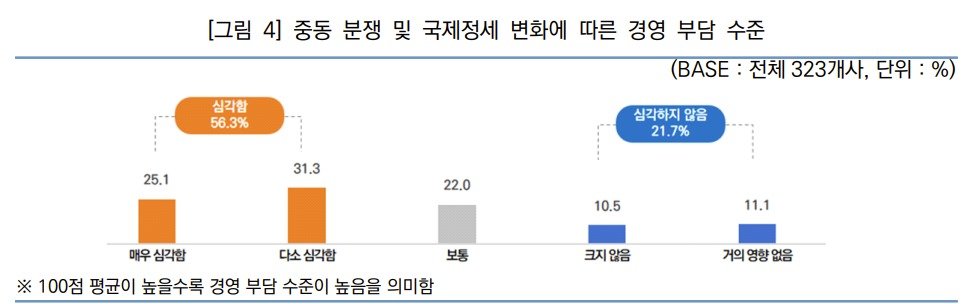
- A survey by the Korea Management Innovation SME Association found that 56.3% of SMEs feel burdened by the extended international political situation, with smaller businesses experiencing the crisis more severely.
- Rising production costs are perceived as a greater threat by SMEs than supply chain disruptions, highlighting the immediate impact of global instability on their operations.
South Korean small and medium-sized enterprises are grappling with a "cost shock" originating from the Middle East, with smaller businesses bearing the brunt of the impact. Prolonged geopolitical risks have driven up prices for raw materials and energy, while also increasing logistics expenses, creating a mounting burden on businesses.
The severity of the financial strain is particularly acute for companies with fewer than 10 employees. A survey by the Korea Management Innovation SME Association revealed that 31.3% of businesses with 9 or fewer employees reported extreme management difficulties due to the ongoing international political situation. This contrasts with larger companies, where no firms with 300 or more employees reported such severe issues.
Overall, 56.3% of surveyed SMEs indicated that the prolonged international political landscape is negatively affecting their business operations. When asked about the biggest threats, SMEs identified rising production costs as a more significant concern than supply chain disruptions. This suggests that the immediate increase in operational expenses is a more pressing issue for these businesses than the availability of goods.
DistantNews Editorial
Originally published by Dong-A Ilbo in Korean. Translated, summarized, and contextualized by our editorial team with added local perspective. Read our editorial standards.
More Stories


From Our Blog

What Gets Lost (and Found) When News Is Translated

The Critical Role of Diaspora Media in Global News

What Travellers Should Know About Countries with Restricted Press

A Digital Nomad's Guide to Following Local News

How the Same Story Looks Different in Different Countries
