


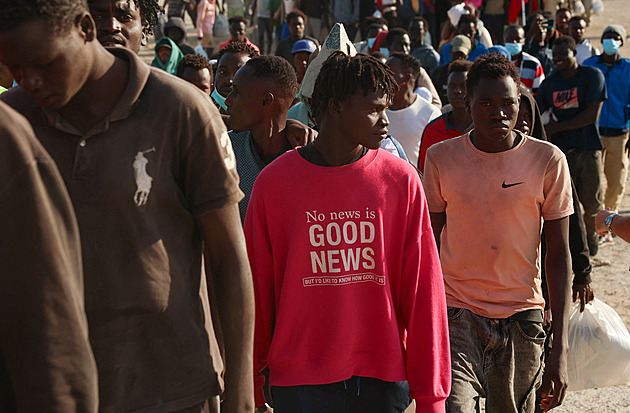
 Image: Reuters
Migrants Hide in Hills Above Ceuta Beach, Locals Burn Shelters
Translated from Czech and summarized by DistantNews. Read the original for the full story.
At a glance
News
Sources not specified
Context piece
- Thousands of migrants remain in Spain's Ceuta enclave a month after crossing from Morocco.
- Some migrants hide in hills near El Trampolín beach to evade authorities.
- They emerge primarily to seek food, water, and humanitarian assistance.
Thousands of migrants are still in the Spanish enclave of Ceuta, nearly a month after a large group crossed the border from Morocco. The situation highlights the ongoing challenges of irregular migration in the region. Many of these individuals are attempting to avoid detection by Spanish authorities.
To evade police and identification efforts, some migrants have resorted to hiding in the hills overlooking El Trampolín beach. This precarious existence forces them to descend to the coast only when necessary, primarily to access essential humanitarian aid, including food and water. Their daily lives are defined by evasion and the search for basic necessities.
The local population's response has added another layer of tension. Reports indicate that some locals have set fire to shelters used by the migrants. This act of hostility underscores the strained relationship between the migrant population and the residents of Ceuta, exacerbating the difficult conditions faced by those seeking refuge or a new life.
This situation in Ceuta is a stark illustration of the complex humanitarian and political issues surrounding migration. The migrants' struggle for survival, coupled with the local community's reactions, paints a grim picture of their current reality. The ongoing presence of thousands of people in the enclave points to unresolved challenges in border management and migrant integration.
About this summary
Originally published by iDNES in Czech. Translated, summarized, and contextualized automatically by DistantNews, with a note on how the source frames the story. Not individually reviewed before publishing. How this works.
More Stories

From Our Blog

What Gets Lost (and Found) When News Is Translated

The Critical Role of Diaspora Media in Global News

What Travellers Should Know About Countries with Restricted Press

A Digital Nomad's Guide to Following Local News

How the Same Story Looks Different in Different Countries
