


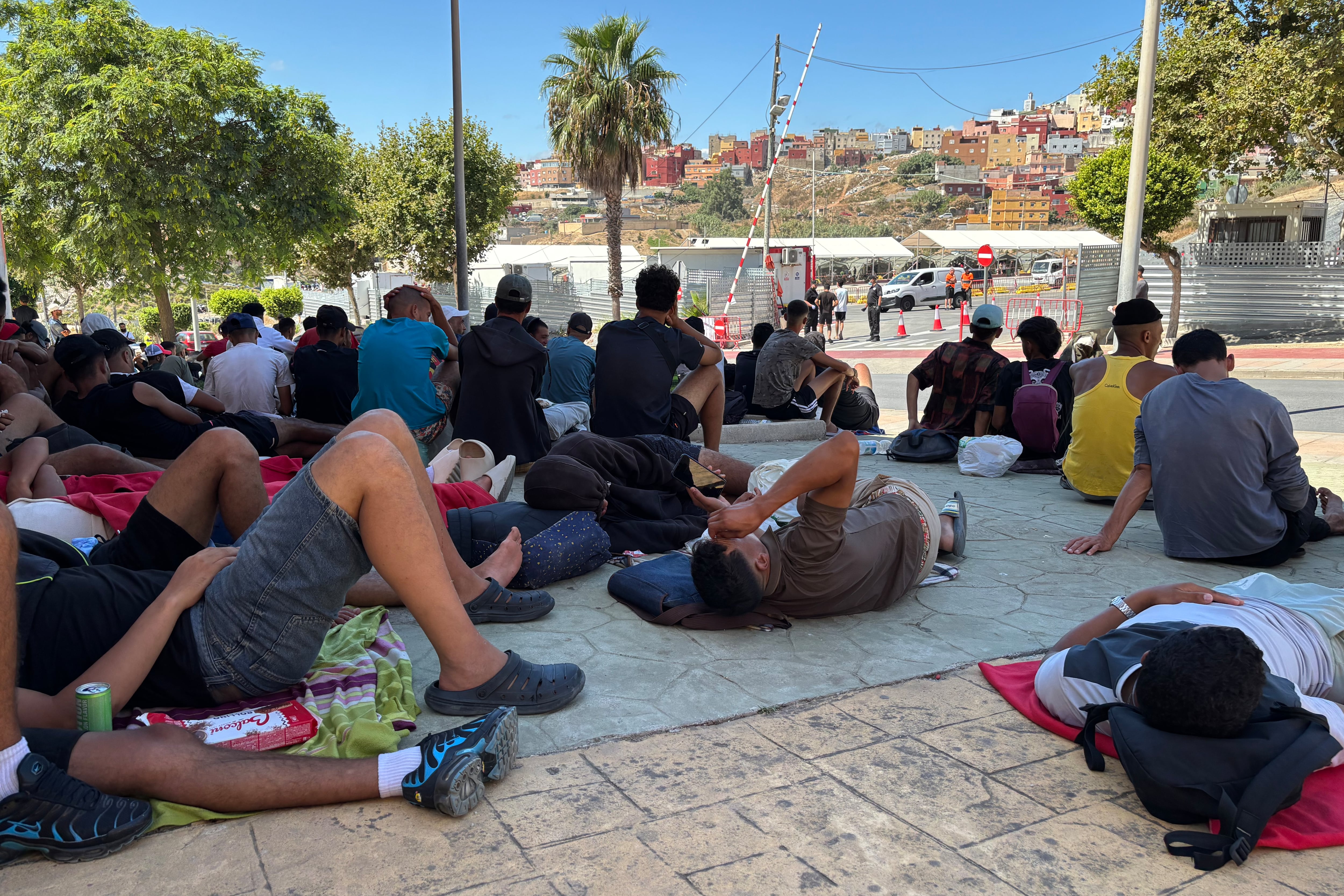
Migrants in Ceuta Accept Shelters but Fear Expulsion Trap
Translated from Spanish, summarized and contextualized by DistantNews.
At a glance
News
Named sources
Context piece
- Migrants in Ceuta are accepting temporary shelter spaces but remain wary of potential traps for expulsion.
- Around 2,500 migrants are housed in organized centers, while another 2,500 remain on the streets.
- Concerns about safety and expulsion lead some migrants to prefer sleeping outdoors despite harsh conditions.
Ceuta awoke to a subdued atmosphere on Saturday, with reduced traffic and a slow return to apparent normalcy in some areas. On El Trampolín beach, the epicenter of the main migrant camp, cleaning services resumed their efforts after being halted the previous day due to security concerns. A dozen tents still dotted the sand, and about a hundred young men were simultaneously using the temporary showers.
Currently, approximately 2,500 individuals are housed in centers managed by the ministry, the autonomous city, or various neighborhood associations. However, an equal number wander the city, seemingly aimless, with their hands in their pockets for hours.
Hasam and his friends, originally from areas near Tangier and Tetouan, stated they prefer sleeping on plastic sheeting by the roadside, believing the reception centers are a trap designed for easier expulsion. "They want to keep us there because it's easier to expel us. I won't make it that easy. If they come for us, I can escape here and head for the sea if necessary," Hasam explained, speaking a mix of Spanish, Moroccan Arabic, and English under the intense sun.
One facility preparing to receive new migrants is the Hípica, a public-private club where 40 horses will soon share space with the young men. The club has complied with the city government's order, though its members have posted a banner stating: "No to the placement of migrants in the Hípica."
At the Temporary Stay Center (CETI), Jayte Balaar from Sudan has been sleeping in a real bed and eating three hot meals a day since arriving on July 30. "I want to get to Madrid," he said, acknowledging he will stay as long as necessary to achieve his goal.
The El Tarajal industrial estate presents a starkly different reality. Amidst semi-abandoned warehouses and small businesses selling plastic goods and cheap clothing, hundreds of young men live, admitting they only leave to collect daily aid packages distributed by the Red Cross. Most women, including Hasam's sister, are housed in a shelter set up by residents in the La Reina neighborhood, which offers a more cheerful atmosphere than El Tarajal, though many still spend hours looking at their phones while sitting on the floor.
It is anticipated that next week, these women will move from their current shelter, protected by plastics and carpets donated by local mosques and movements, to a new location announced by the Ministry of Inclusion, Social Security, and Migrations. The Hípica facility is slated to become the new accommodation for women and children arriving from.
No a la ubicación de emigrantes en la Hípica.
DistantNews Editorial
Originally published by El País in Spanish. Translated, summarized, and contextualized by our editorial team with added local perspective. Read our editorial standards.
More Stories


From Our Blog

What Gets Lost (and Found) When News Is Translated

The Critical Role of Diaspora Media in Global News

What Travellers Should Know About Countries with Restricted Press

A Digital Nomad's Guide to Following Local News

How the Same Story Looks Different in Different Countries
