


Millions of Sudanese Mark Eid amid Displacement, Poverty and Hunger
Summarized by DistantNews. Read the original for the full story.
At a glance
News
Named sources
Ongoing story
- Millions of Sudanese are marking Eid al-Adha amidst ongoing conflict, displacement, poverty, and hunger, as the war enters its fourth year.
- Traditional holiday customs like family gatherings and sharing grilled meat have been replaced by urgent needs for food, medicine, and water.
- Displaced individuals in camps face severe shortages and disease outbreaks, while those remaining in cities struggle with economic hardship and inflation.
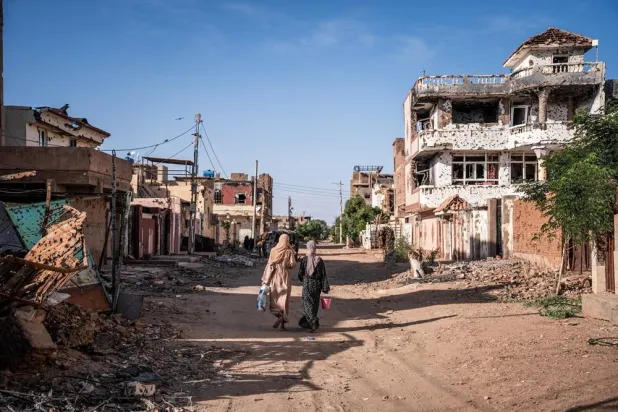
Millions of Sudanese are observing Eid al-Adha under the grim shadow of a protracted war, now entering its fourth year. The holiday, traditionally a time for family reunions and communal feasting, is overshadowed by a harsh humanitarian and economic reality marked by widespread displacement, poverty, and hunger.
Children no longer ask about clothes or toys, but about food. Many of them do not even feel that there is an Eid.
The conflict has fundamentally altered the fabric of holiday celebrations. Priorities have shifted dramatically from purchasing sacrificial animals and new clothes for children to the desperate search for basic necessities like food, medicine, and clean drinking water. The cherished social rituals of exchanging visits, sharing grilled meat, and gathering with loved ones have been severely weakened, with many families unable to afford even basic provisions.
Those displaced by the conflict are bearing the brunt of this hardship. Living in camps and shelters that often lack essential services, they face crowded conditions, high temperatures, and a scarcity of food, water, and healthcare. The spread of diseases such as cholera, malaria, and dengue fever exacerbates their suffering. One displaced woman from North Darfur, Amouna Ismail, shared the heartbreaking reality: "Children no longer ask about clothes or toys, but about food. Many of them do not even feel that there is an Eid."
But what can we do? We are waiting for the war to stop and to return to our country.
Even for those who remain in cities and towns, life is a daily struggle against a suffocating economy. Sharp price increases, dwindling incomes, and disrupted basic services mean that even essential goods are becoming unaffordable. A secondary school teacher, Hashim Moussa, lamented that his salary is no longer sufficient to purchase even a single sack of sugar, whose price has skyrocketed. In neighboring countries, Sudanese refugees are largely dependent on humanitarian aid, with many expressing a profound longing for peace and the chance to return home, having lost the joy of any Eid since fleeing their homeland.
In the past, Eid was an occasion for joy and connection. Now people feel ashamed because they cannot do anything for their children or their displaced neighbors.
About this summary
Originally published by Asharq Al-Awsat. Summarized and contextualized automatically by DistantNews, with a note on how the source frames the story. Not individually reviewed before publishing. How this works.
More Stories

From Our Blog

News in Translation: What Gets Lost, and How We Keep the Framing

Diaspora Media: How Communities Abroad Follow Home

Traveling Where the Press Is Not Free: How to Read the News There

The Digital Nomad's Guide to Local News

The Same Story, Different Countries: How Coverage Changes at the Border
