


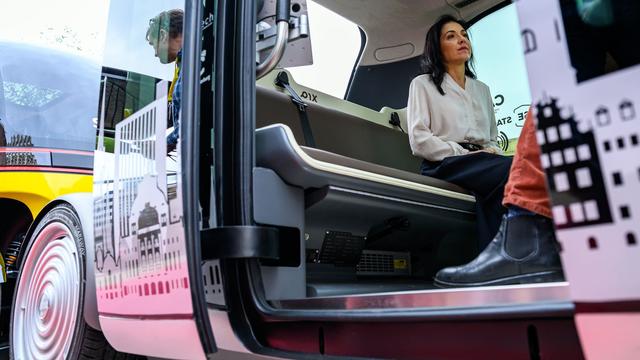
Mobility of the Future: Can Autonomous Driving Become the Engine of Structural Change?
Translated from German, summarized and contextualized by DistantNews.
At a glance
News
Named sources
Context piece
- Autonomous driving is seen as a key technology for the future of Saxony's automotive industry, amidst the transition to electric mobility.
- Politicians, scientists, and businesses hope it will drive structural change and create new value chains in the region.
- Germany faces international competition, particularly from the US and China, and requires a national strategy and increased investment to remain competitive.
Autonomous driving is emerging as a pivotal technology for Saxony's automotive sector, offering a potential engine for structural change as the industry navigates the shift to electric vehicles.
While manufacturers and suppliers grapple with the transition to electromobility, with plants like Volkswagen's in Zwickau facing pressure, the focus is now sharpening on self-driving technology. Policymakers, academics, and industry leaders in Saxony are pinning their hopes on autonomous driving not only to manage the ongoing transformation but also to foster new avenues of economic value creation within the state.
The technology itself is not new; cities like Hamburg already offer services with self-driving minibuses, and other projects are underway in Berlin, Hesse, and Bavaria. Saxony has been developing related technologies for years, aiming to integrate autonomous vehicles into public transport by 2030. To this end, 19 partners from industry, science, municipalities, and politics signed a joint declaration of intent in the spring.
However, Germany faces significant international pressure. The Association of German Transport Companies (VDV) warns that Germany is lagging in the global race for autonomous driving, which is largely driven by dynamism from the United States and China. VDV President Ingo Wortmann is calling for a national strategy, increased investment, and improved regulatory frameworks.
Karsten Schulze, CEO of Chemnitz-based technology firm FDTech, highlights the region's unique strengths. He points to a dense network of specialized companies around Chemnitz that cover the entire value chain, from algorithm development to sensor technology and functional safety. These competencies extend beyond automotive applications, potentially benefiting public transport, logistics, agriculture, and construction. Schulze cautions, however, that while the region remains competitive, it is no longer a pioneer due to more favorable conditions elsewhere. He stresses the urgent need for political and societal frameworks that facilitate the deployment of this technology in Germany, to avoid becoming mere integrators of foreign technology.
DistantNews Editorial
Originally published by Die Zeit in German. Translated, summarized, and contextualized by our editorial team with added local perspective. Read our editorial standards.
More Stories

From Our Blog

What Gets Lost (and Found) When News Is Translated

How the Same Story Looks Different in Different Countries

The Critical Role of Diaspora Media in Global News

What Travellers Should Know About Countries with Restricted Press

A Digital Nomad's Guide to Following Local News
