


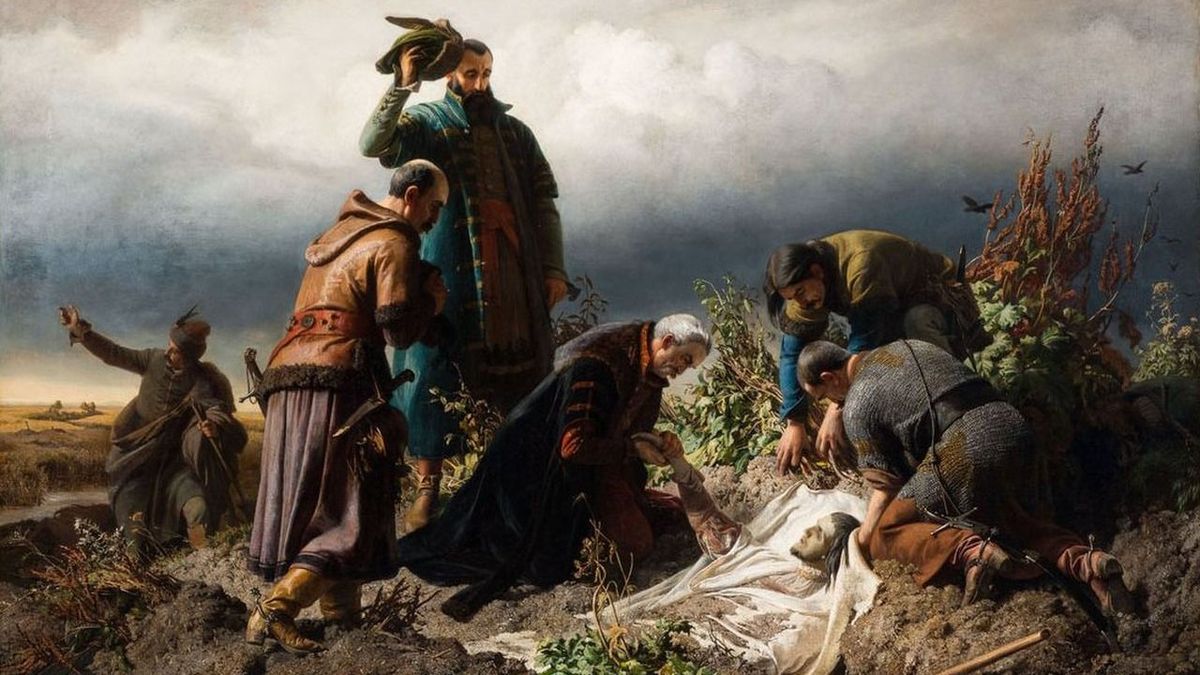
Mohács 500: Recounting the fateful battle that shaped Hungary's future
Translated from Hungarian and summarized by DistantNews. Read the original for the full story.
At a glance
News
Sources not specified
Context piece
- On August 29, 1526, the Hungarian Kingdom and Europe faced a pivotal battle against the Ottoman Empire's vastly superior forces led by Sultan Suleiman.
- Despite overwhelming odds, King Louis II and his Christian army fought fiercely to halt the Islamic advance, a tragic defeat that became a symbol of self-sacrificing heroism.
- The article details the events of that fateful day hour by hour, commemorating the heroes of Mohács and reflecting on the battle's profound impact on Hungarian history.
Exactly five centuries ago, on August 29, 1526, a fateful clash occurred on the plains near Mohács that would shape the future of the Hungarian Kingdom and, indirectly, Europe for over a century and a half. This engagement pitted the formidable army of Ottoman Sultan Suleiman I, boasting significant numerical, leadership, and technological superiority, against the forces of King Louis II of Hungary and Bohemia.
Though the outcome of the battle was largely predictable given the vast disparity in strength, King Louis II, determined to defend his homeland and kingdom at the cost of his life, led his resolute Christian army into the fray. They fought with unwavering determination against the Sultan's overwhelming might, attempting to halt the westward expansion of Islam under the banner of the Prophet, even as they were pushed to their last stand.
This tragic battle in Hungarian history was more than just a military defeat; it stands as an enduring example of self-sacrificing heroism. The article aims to recount the events of that dramatic day, August 29, 1526, hour by hour, serving as a commemoration of the heroes of Mohács.
At the time of the encampment near Mohács, significant reinforcements were still en route. These included János Szapolyai's highly experienced Transylvanian contingent of 10-15,000 soldiers, and Kristóf Frangepán's army of eight to ten thousand from Slavonia. Additionally, 2-3,000 professional Czech mercenaries, funded by the Pope, were also approaching. Thus, two armies converged: from the south, Suleiman's 80,000-strong force, the most powerful army of its time, and from the north, King Louis II's army, which was growing in number but remained considerably smaller than the Ottoman host. Their meeting point was the small market town of Mohács, situated beside the Danube's floodplain.
About this summary
Originally published by Magyar Nemzet in Hungarian. Translated, summarized, and contextualized automatically by DistantNews, with a note on how the source frames the story. Not individually reviewed before publishing. How this works.
More Stories
From Our Blog

Countries Without a Free Press: What You Need to Know

What Press Freedom Means for the News You Read

What Gets Lost (and Found) When News Is Translated

The Critical Role of Diaspora Media in Global News

What Travellers Should Know About Countries with Restricted Press
