

Mojtaba Khamenei’s Absence Signals Shifting Role for Iranian Leader
Translated from English, summarized and contextualized by DistantNews.
At a glance
Analysis
Named sources
Context piece
- Mojtaba Khamenei, Iran's new supreme leader, has not appeared publicly since succeeding his father, Ali Khamenei, who died in an airstrike.
- His absence from his father's funeral ceremonies has fueled speculation about his health, potential assassination fears, and a possible shift in his role compared to his father's.
- Analysts suggest Mojtaba Khamenei may be further subordinated to the Revolutionary Guards and could be a different political figure, potentially facing a power struggle.
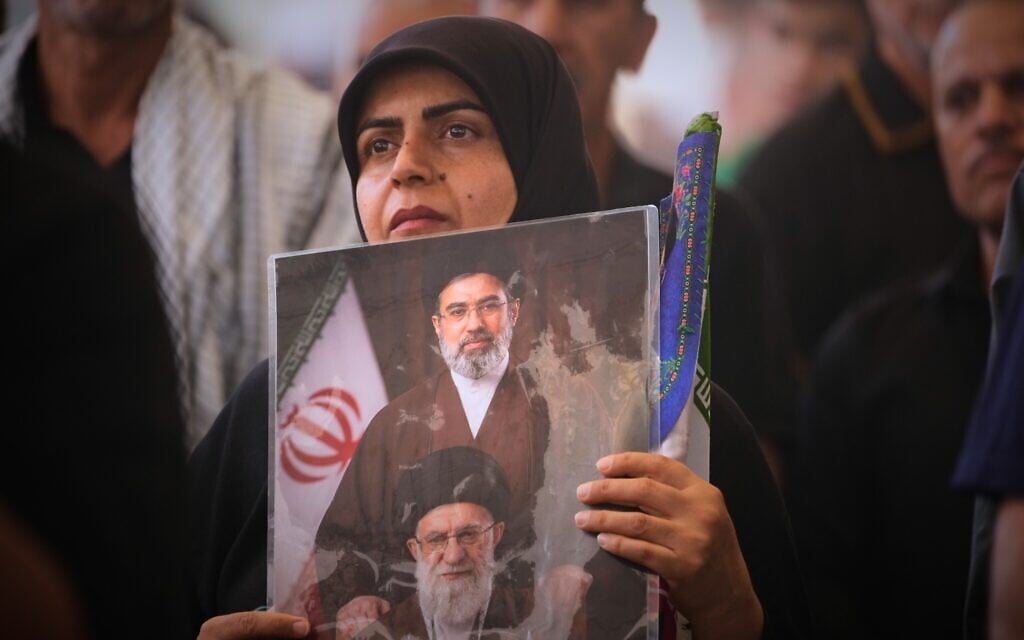
The public absence of Mojtaba Khamenei, Iran's newly appointed supreme leader, since his father Ali Khamenei's death has ignited widespread speculation regarding his health and security. Ali Khamenei was killed in an airstrike on February 28, marking the start of a US-Israeli war with Iran. His funeral ceremonies, which concluded in Mashhad, were attended by key figures of the Islamic Republic, but Mojtaba Khamenei was notably absent, communicating only through written statements.
Unverified claims and social media discussions have focused on whether Mojtaba Khamenei was too injured or disfigured in the airstrike that killed his father to make a public appearance. Concerns about potential assassination attempts by Israel or the US have also been raised as reasons for his reclusion. Despite intense scrutiny of available images, there has been no confirmed sighting of the 56-year-old leader.
His low overall public profile and absence from his own father’s funeral don’t look good for his public image, but it may be temporary, and is manageable in the long-term.
Analysts suggest that Mojtaba Khamenei is shaping up to be a different kind of leader than his father. There are expectations that power will be further delegated to the Revolutionary Guards (IRGC), Iran's ideological army, amid potential political infighting. This shift could indicate a changing power balance within the country's leadership structure.
Farzan Sabet, a researcher at the Geneva Graduate Institute, commented that Mojtaba Khamenei's low public profile and absence from his father's funeral do not bode well for his public image, though he believes this may be temporary. Sabet attributes the absence to a combination of possible physical injury and security concerns, as public appearances could make him a target for tracking and future assassination. Sabet anticipates a potential power struggle, suggesting that Mojtaba Khamenei might be further subordinated to the IRGC.
a combination of physical injury that means he’s not publicly presentable and security considerations given the risk that public appearances will be used to track him and prepare the grounds for a future assassination.
DistantNews Editorial
Originally published by Times of Israel in English. Translated, summarized, and contextualized by our editorial team with added local perspective. Read our editorial standards.
More Stories

From Our Blog

What Gets Lost (and Found) When News Is Translated

The Critical Role of Diaspora Media in Global News

What Travellers Should Know About Countries with Restricted Press

A Digital Nomad's Guide to Following Local News

How the Same Story Looks Different in Different Countries
