


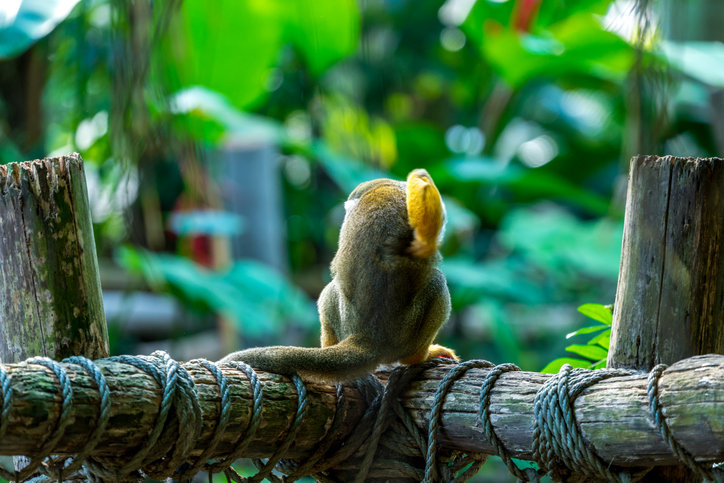
Monkeys petting mice and caring for other animals... Is there a hidden 'caretaker instinct' in primates?
Translated from Korean, summarized and contextualized by DistantNews.
At a glance
News
Named sources
Context piece
- A study analyzed 427 cases of primates interacting with other species, finding that "play" and "grooming" were the most common behaviors.
- Young primates were more likely to engage in play, while adult females frequently groomed other species, often initiating the interaction.
- The research suggests these cross-species interactions may stem from social motivation and cognitive flexibility, potentially offering insights into the human bond with pets.
An extensive study has revealed that primates exhibit a surprising tendency to interact with, play with, and even care for animals of different species. Researchers analyzed 427 documented instances of such cross-species engagement, drawing from academic literature, media, and surveys of primatologists.
The most frequently observed behaviors were "play" and "grooming," accounting for approximately 64% of all recorded interactions. The study, led by Dr. Cyril Grueter of Oxford University, found distinct patterns based on age and sex. Young primates were more inclined to play with other species, while adult females were notably active in grooming, often initiating these gentle interactions.
Interestingly, adult males were less likely than adult females to display affiliative behaviors towards other species. These cross-species bonds were not limited to primates raised by humans; a significant number of observations came from wild populations, where primates were seen interacting with a variety of animals, including dogs and deer.
Primates were often the initiators of these interactions, approaching other species in 66% of cases where the initiator could be identified. The researchers suggest that a combination of strong social motivation, cognitive flexibility, and a propensity for exploration or caregiving may drive these behaviors. This challenges the notion that such nurturing interactions are exclusive to humans and their pets.
Contrary to initial expectations, the study found that the age of the interacting animal was not a significant factor. Both adult and young animals received similar levels of attention. This suggests that the willingness of the other animal to engage and accept the interaction might be more crucial than its age. In environments where finding conspecifics is difficult, primates may seek companionship with other species. The findings, published in the journal "Primates," offer a potential evolutionary perspective on why humans form such deep bonds with animals.
The scene of a gibbon caring for a mouse was the starting point for my research on interspecies interactions.
DistantNews Editorial
Originally published by Dong-A Ilbo in Korean. Translated, summarized, and contextualized by our editorial team with added local perspective. Read our editorial standards.
More Stories



From Our Blog

What Gets Lost (and Found) When News Is Translated

The Critical Role of Diaspora Media in Global News

What Travellers Should Know About Countries with Restricted Press

A Digital Nomad's Guide to Following Local News

How the Same Story Looks Different in Different Countries
