


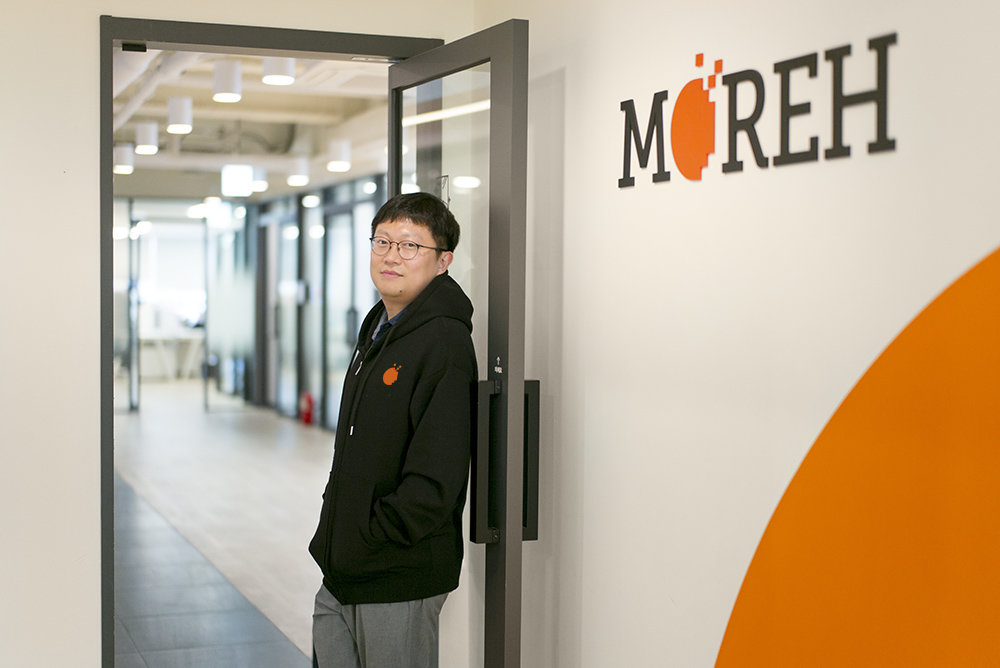
MOREH chief targets inference AI market with AMD and heterogeneous infrastructure strategy
Translated from Korean and summarized by DistantNews. Read the original for the full story.
At a glance
Interview
Named sources
Context piece
- MOREH CEO Cho Kang-won said rising demand for inference and “token factories” is creating new opportunities for AMD-based AI infrastructure.
- The South Korean company develops software for AMD’s Instinct GPUs and ROCm stack, and works with AMD on customised libraries and engineering projects.
- MOREH also partners with Canada’s Tenstorrent and plans to add one or two more AI accelerator makers to its software platform next year.
AMD has gained ground in overseas AI markets, but its position remains relatively small in South Korea. MOREH CEO Cho Kang-won says that may change as companies look for more cost-efficient data centres built for inference rather than training.
Cho said the growing use of “token factories,” a concept tied to AI services and inference, had pushed token demand into a new growth phase this year. He said customers were increasingly considering AMD as an alternative to Nvidia infrastructure, particularly in the United States and China, where Nvidia GPU supply has been difficult to secure.
Overseas markets are seeing AMD perform well, but its position is unusually small in South Korea.
MOREH, founded in 2020 with Cho as a co-founder, focuses on AMD’s hardware and software stack. The company optimises AMD’s Instinct server GPUs and ROCm software for commercial environments. It also develops customised libraries for customers, from bare-metal systems to low-level software.
The token factory business has entered a full-fledged growth curve this year.
Cho said MOREH received Series B funding from AMD in 2023 and was asked to help move parts of AMD’s ecosystem from an OpenCL-heavy environment to one based on ROCm. The company works mainly with customers in the Asia-Pacific region that choose AMD hardware and collaborates directly with AMD’s headquarters on engineering projects.
The company is also pursuing heterogeneous computing through a partnership with Canada’s Tenstorrent. Cho said MOREH’s strength lies in optimising large-scale systems from the outset, rather than building a cluster only after developing an individual chip. Because Tenstorrent chips are intended for broad use and depend heavily on software, he said the partnership was a natural fit.
AMD is the only meaningful option when considering AI infrastructure other than Nvidia.
MOREH currently supports AMD and Tenstorrent and expects to add one or two AI accelerator manufacturers next year. Cho said the goal is to let different chip architectures operate independently at cluster level through the company’s software. AMD invited MOREH to its Advancing AI 2026 event, where the company appeared with a booth for the first time and presented its distributed inference software and technology.
Many AI semiconductor companies build high-performance chips and then structure them into clusters. Our technology is optimised for large-scale environments, so collaboration is more efficient with companies that consider large-scale configurations from the beginning.
About this summary
Originally published by Dong-A Ilbo in Korean. Translated, summarized, and contextualized automatically by DistantNews, with a note on how the source frames the story. Not individually reviewed before publishing. How this works.
More Stories


From Our Blog

What Gets Lost (and Found) When News Is Translated

The Critical Role of Diaspora Media in Global News

What Travellers Should Know About Countries with Restricted Press

A Digital Nomad's Guide to Following Local News

How the Same Story Looks Different in Different Countries
