


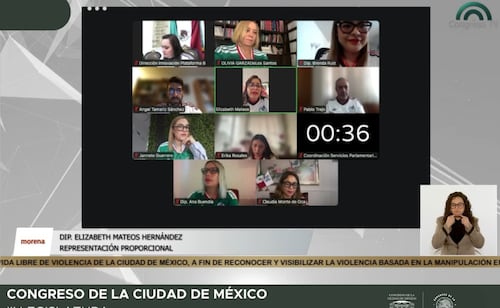
Morena deputy proposes initiative to penalize psycho-emotional violence; seeks to punish manipulation tactics
Translated from Spanish, summarized and contextualized by DistantNews.
At a glance
News
Sources not specified
New plan
- A Morena party deputy in Mexico City proposed a new initiative to penalize psycho-emotional violence against women.
- The proposal aims to criminalize systematic emotional manipulation, including gaslighting and isolation tactics.
- Current laws already punish psycho-emotional violence, but this initiative seeks to expand its scope within family and dating violence contexts.
A Morena party deputy in Mexico City has introduced a legislative proposal to specifically address and penalize psycho-emotional violence against women. Deputy Elizabeth Mateos aims to amend the Law on Access for Women to a Life Free of Violence in Mexico City to formally recognize systematic emotional manipulation as a form of psycho-emotional violence.
The proposed changes define this manipulation as a pattern of repeated behaviors intended to control, subjugate, or foster emotional dependence in a victim. Tactics include distorting reality, denying obvious facts, constant devaluation, social isolation, inducing guilt, and alternating between affection and rejection for control purposes. Mateos highlighted common phrases used in such manipulation, like "you're exaggerating" or "nobody will love you like I do," emphasizing that when repeated, these expressions become a form of violence.
Currently, Mexico City's Penal Code already prescribes prison sentences of one to six years and the loss of certain rights for perpetrators of psycho-emotional violence. Mateos's initiative seeks to integrate systematic emotional manipulation, coercive control, and reality distortion into the definitions of family violence and violence in dating relationships, provided they are exercised repeatedly to control or create dependence. The deputy stressed that while physical wounds are visible, psychological damage can endure for years, and neither should be minimized.
DistantNews Editorial
Originally published by El Universal in Spanish. Translated, summarized, and contextualized by our editorial team with added local perspective. Read our editorial standards.
More Stories



From Our Blog

What Press Freedom Means for the News You Read

What Gets Lost (and Found) When News Is Translated

The Critical Role of Diaspora Media in Global News

What Travellers Should Know About Countries with Restricted Press

A Digital Nomad's Guide to Following Local News
