


Moroccans Search for Missing Relatives After Dangerous Swim to Ceuta
Translated from Danish, summarized and contextualized by DistantNews.
At a glance
News
Sources not specified
Ongoing story
- Dozens of Moroccans gathered in Fnideq, hoping for news of family members who swam to the Spanish enclave of Ceuta.
- Many migrants, including minors, attempted the dangerous crossing earlier in the week, with thousands entering Ceuta.
- Families anxiously await information, fearing the worst as official death tolls vary and communication with loved ones is lost.
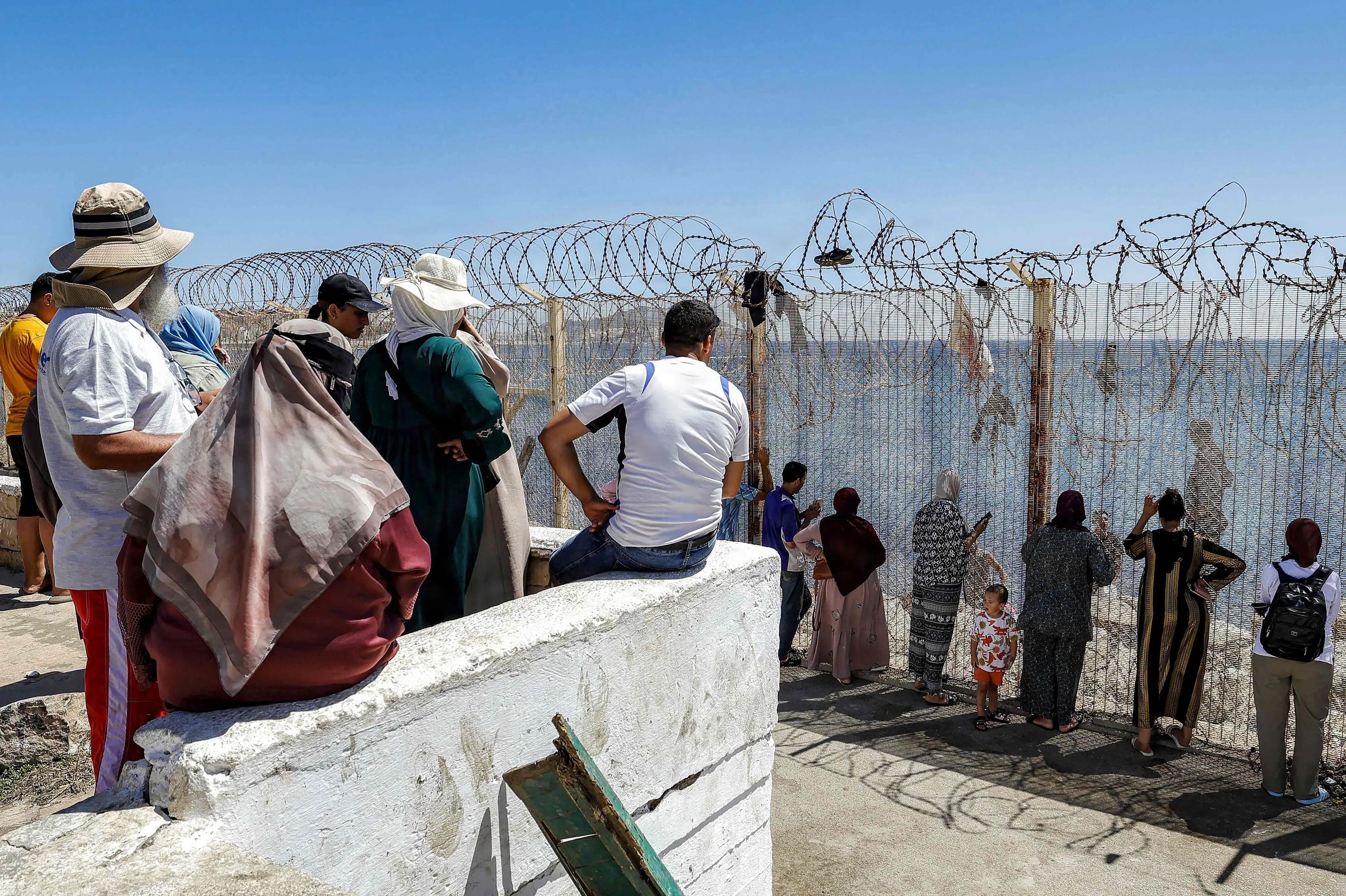
In the Moroccan border town of Fnideq, dozens of people gathered Sunday, their faces etched with worry as they scanned the horizon and border fences. They are desperately seeking news of family members among the thousands who swam to the Spanish enclave of Ceuta earlier in the week.
Two of my brother's friends called me Friday to say they had left the day before, but that he (the brother) had suffered a muscle tear, and they had been separated.
Among them is Aldellatif, a 27-year-old agricultural worker from Moulay Bousselham, located about 135 kilometers southwest of Fnideq. His primary concern is his 17-year-old brother, who attempted the perilous journey to Ceuta with two friends on Thursday. More than 60,000 migrants reportedly entered the Spanish territory, with most subsequently returned to Morocco. Spanish authorities reported at least 72 deaths on the Spanish side, while the Moroccan human rights group AMDH suggested the number could be closer to 130.
"Two of my brother's friends called me Friday to say they had left the day before, but that he (the brother) had suffered a muscle tear, and they had been separated," Aldellatif recounted. The friends have since returned to Morocco, but Aldellatif remains in agonizing uncertainty about his younger brother's whereabouts and well-being. "My biggest fear is going home without him. I don't understand why he did it, and I don't understand the authorities' silence," he said.
My biggest fear is going home without him. I don't understand why he did it, and I don't understand the authorities' silence.
Aldellatif believes the government has been too passive, failing to adequately warn young people about the dangers of irregular migration and the spread of misinformation on social media, a factor Morocco's interior ministry has cited for the recent surge in arrivals. At the border fence in Fnideq, parents display photos and question returnees, hoping for any sign of their children. One woman expressed relief upon learning her son was seen in Ceuta on Saturday. Richida Mamakh, 48, anxiously searched for her 23-year-old son, Zouhair, who had called her Thursday saying he had reached Ceuta. She has not heard from him since, praying for his safe return. Mamakh mentioned her son was unemployed and had learned German, dreaming of a better life in Germany.
I pray to God that he returns home safely.
DistantNews Editorial
Originally published by Berlingske in Danish. Translated, summarized, and contextualized by our editorial team with added local perspective. Read our editorial standards.
More Stories


From Our Blog

What Gets Lost (and Found) When News Is Translated

The Critical Role of Diaspora Media in Global News

What Travellers Should Know About Countries with Restricted Press

A Digital Nomad's Guide to Following Local News

How the Same Story Looks Different in Different Countries
