


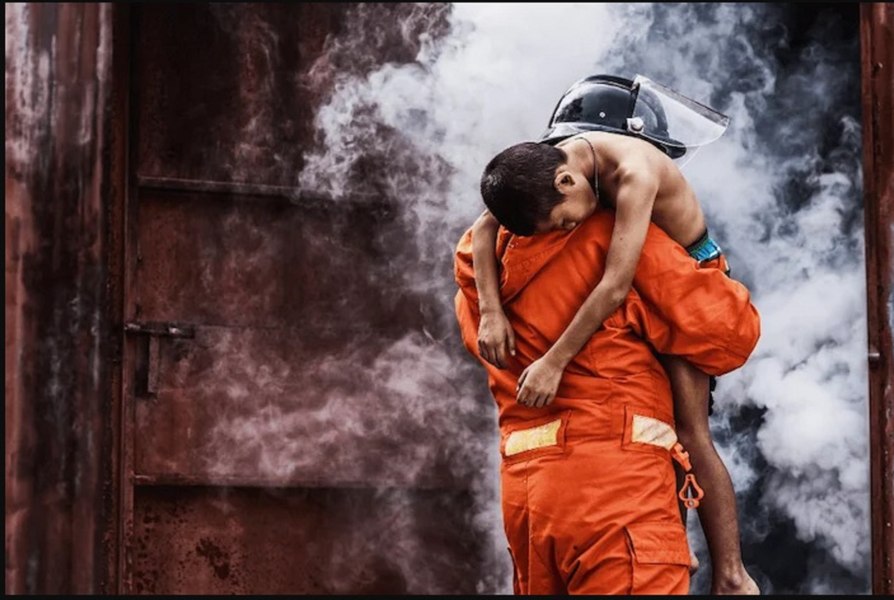
Most People Aren't Capable of Heroic Acts, Studies Show
Translated from Romanian, summarized and contextualized by DistantNews.
TLDR
- Studies indicate most people are not capable of heroic acts, prioritizing self-preservation over risking their lives for others.
- Heroism is not genetic but can be cultivated through learned traits like expansive empathy, heroic imagination, special preparation, and a habit of helping.
- The bystander effect, where individuals are less likely to help when others are present, is a well-documented psychological phenomenon that explains this tendency.
The recent international studies highlighted in this piece challenge a common societal belief: that anyone can be a hero in a crisis. While popular culture, particularly from sources like Marvel's Spider-Man, often suggests that heroism is an innate potential within everyone, psychological research paints a different picture. The findings suggest that the majority of people, when faced with extreme situations, will default to their survival instincts, a behavior that is natural across the animal kingdom.
This perspective, while perhaps sobering, is not presented as a flaw but as a normal biological response. However, the research does identify a smaller subset of individuals who can overcome these instincts. These are the people who perform heroic acts, whether by saving lives or dedicating themselves to a cause, even a national one. The article delves into the work of political scientist Ari Kohen, who posits that heroism is not a matter of genetics but of cultivated character traits.
Anyone can wear the mask. Anyone can be a hero.
Kohen's research identifies four key learned attributes: expansive empathy, heroic imagination, special preparation, and a habit of helping. These are not traits one is born with but are developed over time, often unconsciously. This suggests that a 'culture of heroism' can be fostered, though it relies on individuals possessing specific underlying characteristics. The article also touches upon the 'bystander effect,' a well-documented psychological phenomenon where the presence of other people decreases the likelihood of an individual intervening in an emergency. This further underscores the complexity of heroic action and why it remains a rare quality.
Every person believes that, in an emergency situation, they will be the one to intervene and do the right thing, but psychology literature, especially on the bystander effect, says we are terribly mistaken about this.
DistantNews Editorial
Originally published by Adevărul in Romanian. Translated, summarized, and contextualized by our editorial team with added local perspective. Read our editorial standards.
More Stories


From Our Blog

What Gets Lost (and Found) When News Is Translated

The Critical Role of Diaspora Media in Global News

What Travellers Should Know About Countries with Restricted Press

A Digital Nomad's Guide to Following Local News

How the Same Story Looks Different in Different Countries
