


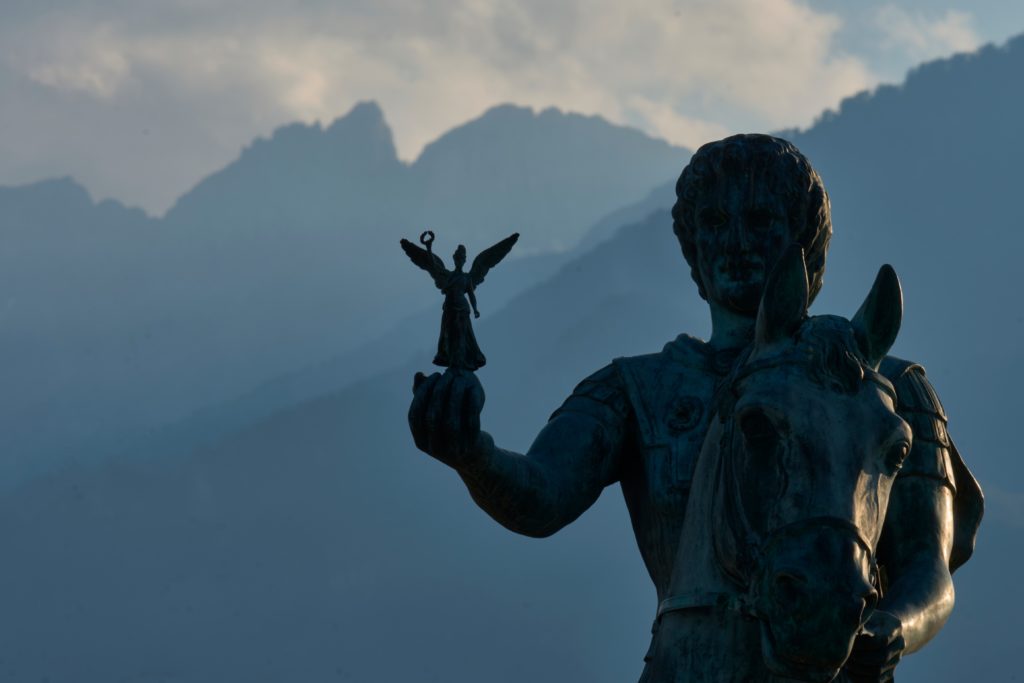
Mount Olympus, home of the ancient Greek gods, vies for World Heritage status
Summarized and contextualized by DistantNews.
At a glance
News
From a news agency
Context piece
- Mount Olympus, the mythological home of the ancient Greek gods, is seeking UNESCO World Heritage status.
- Greece has nominated the mountain as a mixed cultural and natural site, highlighting its myth, history, biodiversity, and beauty.
- The World Heritage Committee will discuss the nomination in Busan, South Korea, later this month.
Mount Olympus, revered as the mythical home of the 12 Olympian gods in ancient Greece, is now vying for recognition on the UNESCO World Heritage List. The mountain, which rises to 2,918 meters (9,573 feet) near the sea, has captivated imaginations for millennia, with ancient Greeks believing it housed the throne of Zeus, king of the gods.
Modern Greeks hope their tallest mountain will be designated a mixed cultural and natural site. The nomination emphasizes Olympus's unique blend of myth, history, extraordinary beauty, and significant biodiversity, including endemic species. The World Heritage Committee is scheduled to discuss the nomination in Busan, South Korea, from Sunday through July 29.
Evagelos Geroliolios, the mayor of Dion-Olympus, based in Litochoro, the mountain's main town, described Olympus as integral to their lives and identity. "Olympus is our life. It is the place we grew up in," he said. "It is the place we see every day, but at the same time, it is also a place which carries with it myth, history, biodiversity, extraordinary beauty and a very great cultural weight."
Olympus is our life. It is the place we grew up in. It is the place we see every day, but at the same time, it is also a place which carries with it myth, history, biodiversity, extraordinary beauty and a very great cultural weight.
Mount Olympus holds a central place in Greek mythology, notably as the seat of Zeus's court after he overthrew his father, Cronus. Excavations on one of its peaks have revealed an open-air sanctuary with finds dating back to the Hellenistic period. Historical accounts suggest processions to Olympus's peaks for animal sacrifices to Zeus. The mountain also maintained religious significance into the Christian era, featuring chapels and monasteries.
Locals are eager for the mountain's inclusion on UNESCO's list, seeing it as a way to protect a place they deeply love and wish others to experience. "It is a place we love. It is a place that many people from all over the world visit to see, to live, to experience. We want to protect it," Geroliolios added.
It is a place we love. It is a place that many people from all over the world visit to see, to live, to experience. We want to protect it.
DistantNews Editorial
Originally published by PBS NewsHour. Summarized and contextualized by our editorial team with added local perspective. Read our editorial standards.
More Stories


From Our Blog

How the Same Story Looks Different in Different Countries

What Gets Lost (and Found) When News Is Translated

The Critical Role of Diaspora Media in Global News

What Travellers Should Know About Countries with Restricted Press

A Digital Nomad's Guide to Following Local News
