


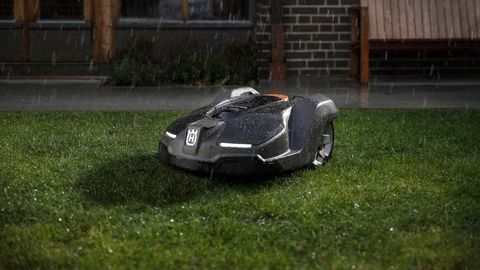
Mowing in the rain? Experts advise on lawn care during extreme weather
Translated from Estonian, summarized and contextualized by DistantNews.
At a glance
News
Named sources
Context piece
- Lawn care mistakes are common during extreme weather, including heavy rain and droughts.
- Experts advise against mowing wet grass, as it can damage the lawn and the mower.
- During dry spells, it's recommended to mow less frequently and leave the grass longer to retain moisture.
Extreme weather conditions, such as heavy rains, thunderstorms, and prolonged dry periods, are challenging for maintaining a healthy lawn. Experts highlight common mistakes homeowners make when trying to care for their grass during these challenging times.
Leila Mainla, a gardening scientist at the Estonian University of Life Sciences, and Aivo Smitt, a maintenance specialist at Husqvarna, point out that mowing during heavy downpours is a significant error. "Heavier mowers can leave tracks in the lawn on soft soil. Wet soil compacts easily, and the grass blades can stick to the mower wheels. It's best to wait for the ground to dry before operating a lawn robot," Smitt advises.
Standing water on the lawn poses a risk to robotic mowers. While these machines are rain-resistant, they are not designed for underwater operation and can be damaged. Smart mowers have weather protection apps that monitor forecasts and direct the mower to its charging station if rain is predicted. Smitt also warns about lightning strikes, advising users to unplug mowers and disconnect boundary wires during thunderstorms to prevent power surges from damaging the charging station and the mower.
Heavier mowers can leave tracks in the lawn on soft soil. Wet soil compacts easily, and the grass blades can stick to the mower wheels. It's best to wait for the ground to dry before operating a lawn robot.
Mainla emphasizes that prolonged puddles are detrimental to the lawn's health, stressing it as much as drought. "If water stands on the lawn for a long time, the roots do not get enough oxygen, creating favorable conditions for moss and various fungal diseases to spread," she explains. Addressing persistent waterlogging might require aerating the lawn, leveling the soil, or installing a drainage system.
Similarly, during periods of drought, frequent mowing should be avoided. Experts recommend mowing less often and leaving the grass about six centimeters tall. Longer grass shades the ground, reducing water evaporation and helping the lawn retain moisture.
If water stands on the lawn for a long time, the roots do not get enough oxygen, creating favorable conditions for moss and various fungal diseases to spread.
DistantNews Editorial
Originally published by Postimees in Estonian. Translated, summarized, and contextualized by our editorial team with added local perspective. Read our editorial standards.
More Stories

/nginx/o/2026/07/27/17811288t1h4d8c.png)
/nginx/o/2026/08/03/17826496t1h9503.jpg)
From Our Blog

What Gets Lost (and Found) When News Is Translated

The Critical Role of Diaspora Media in Global News

What Travellers Should Know About Countries with Restricted Press

A Digital Nomad's Guide to Following Local News

How the Same Story Looks Different in Different Countries
