


Mud volcano appears off Trinidad coast following Venezuelan earthquakes
Translated from Spanish, summarized and contextualized by DistantNews.
At a glance
News
Sources not specified
Outcome reported
- A mud volcano has emerged off the southern coast of Trinidad, likely caused by recent powerful earthquakes in Venezuela.
- The volcano, located near Palo Seco, is about 4 meters high and composed of soft clay.
- This geological event follows other coastal changes in Trinidad attributed to the Venezuelan tremors, including a significant land uplift.
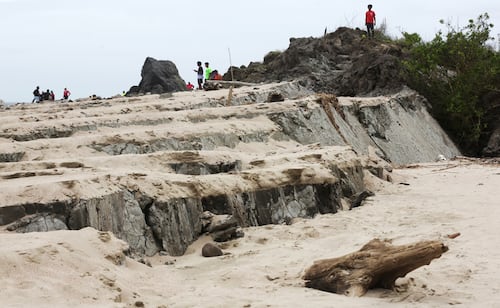
A new mud volcano has appeared off Trinidad's southern coast, a geological phenomenon scientists believe was triggered by the powerful earthquakes that recently struck northeastern Venezuela. This formation adds to a series of geological shifts observed along the island's coastline following the tremors.
Geoscientist Xavier Moonan confirmed the volcano's location approximately 2.5 kilometers east of Beach Camp in Palo Seco. Rising about 4 meters above the seabed, the structure is primarily composed of soft clay extruded from beneath the ocean floor, interspersed with rock fragments and larger calcite-rich rocks resembling coral. Moonan noted that the small island formed by the extrusion is already experiencing erosion from wave action, with initial images showing about a third of it washed away.
"Therefore, it is very likely that this mud extrusion was caused by the recent earthquakes in Venezuela," Moonan stated. This discovery underscores the far-reaching geological impact of the Venezuelan seismic activity on the neighboring island nation.
Researchers from the University of the West Indies' Seismic Research Centre, the Institute of Marine Affairs, and the Trinidad-based consultancy ResiLog Limited are analyzing mud samples to determine the material's age and origin. Neil Sookram, who reportedly was the first to spot the island, observed continuous erosion over the past two days, though the upper part of the island remains stable and the clay is beginning to harden.
This mud volcano formation is distinct from another recent geological event confirmed by scientists: a 6-meter coastal uplift at Galfa Point in Cedros, where seabed material was pushed above sea level. Moonan clarified that while both events were triggered by the same earthquakes, they represent different geological processes. Unlike the uplift at Galfa or the land damage observed in Los Iros due to ground fissures, the mud volcano and its associated island represent a different type of geological response to the seismic forces.
Therefore, it is very likely that this mud extrusion was caused by the recent earthquakes in Venezuela.
DistantNews Editorial
Originally published by El Universal in Spanish. Translated, summarized, and contextualized by our editorial team with added local perspective. Read our editorial standards.
More Stories


From Our Blog

What Press Freedom Means for the News You Read

What Gets Lost (and Found) When News Is Translated

The Critical Role of Diaspora Media in Global News

What Travellers Should Know About Countries with Restricted Press

A Digital Nomad's Guide to Following Local News
