


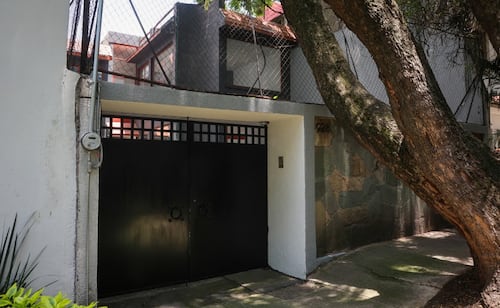
Muralist's family denounces dispossession, accuses authorities of inaction
Translated from Spanish, summarized and contextualized by DistantNews.
At a glance
News
Named sources
Context piece
- Adriana González Camarena, granddaughter of muralist Jorge González Camarena, denounced authorities' inaction regarding property dispossession cases in Mexico City.
- Her family is also a victim of dispossession, facing difficulties in recovering their property despite filing complaints and seeking police intervention.
- She criticized the slow legal process, especially for elderly victims, and highlighted the cultural significance of preserving her grandfather's legacy.
Adriana González Camarena, an artist and the granddaughter of renowned muralist Jorge González Camarena, has publicly denounced what she describes as the inaction of authorities in Mexico City concerning property dispossession cases. Her family, she revealed, is also a victim of such acts, struggling to reclaim their property despite formal complaints and appeals to law enforcement.
In contrast, it seems that those who act outside the law find more facilities than those who go to institutions seeking justice.
González Camarena expressed frustration that individuals operating outside the law seem to find more avenues for success than those seeking justice through official channels. She shared her personal experience in an open letter, detailing how her family's trust in institutions was met with inertia. While acknowledging a recent reform to the Penal Code aimed at strengthening the fight against dispossession, particularly for elderly victims, she lamented that legal advancements are meaningless without enforcement.
I trusted the institutions. However, the response was inaction. The reform of the Penal Code for Mexico City strengthened the fight against the crime of dispossession and incorporated special protection when the victim is an elderly person. That reform represents an important step forward, but no law transforms reality if those who must apply it remain immobile.
"The reform represents an important step forward, but no law transforms reality if those who must apply it remain immobile," she stated. The invaders continue to occupy the property, causing distress to an elderly, ill family member who is now deprived of her home. González Camarena emphasized that dispossession inflicts more than just financial loss; it strips individuals of their history, security, peace, and faith in the state, fracturing lives and projects.
Dispossession not only takes away property. It strips people of their history, their security, their peace, and their trust in the State. It breaks families, destroys life projects, and forces those who should be living a period of tranquility to face draining, costly, and profoundly painful processes.
She underscored the particular significance of her case, given the González Camarena family's dedication to preserving the cultural heritage of the muralist. "A society is measured by the way it protects its elders," she asserted, calling for an end to institutional indifference and delays. She questioned who would be held accountable for the suffering caused by this omission and the message it sends to citizens when dispossession can persist while authorities remain inactive, urging for institutions that act before irreparable damage occurs.
A society is measured by the way it protects its elders, so it should not exercise indifference or institutional delay against them.
DistantNews Editorial
Originally published by El Universal in Spanish. Translated, summarized, and contextualized by our editorial team with added local perspective. Read our editorial standards.
More Stories


From Our Blog

What Press Freedom Means for the News You Read

What Gets Lost (and Found) When News Is Translated

The Critical Role of Diaspora Media in Global News

What Travellers Should Know About Countries with Restricted Press

A Digital Nomad's Guide to Following Local News
