


Museums Vie for Bones of Deceased Humpback Whale 'Timmy'
Translated from German, summarized and contextualized by DistantNews.
At a glance
Newswire
From a news agency
Outcome reported
- Several museums in Denmark, Germany, and the Netherlands have expressed interest in acquiring bones from the deceased humpback whale known as "Timmy."
- The Copenhagen Natural History Museum secured several bones, including a flipper, pelvic bones, and vertebrae, but will not display them initially.
- The whale's death and the handling of its remains drew criticism after a private initiative released it into the North Sea against scientific advice.
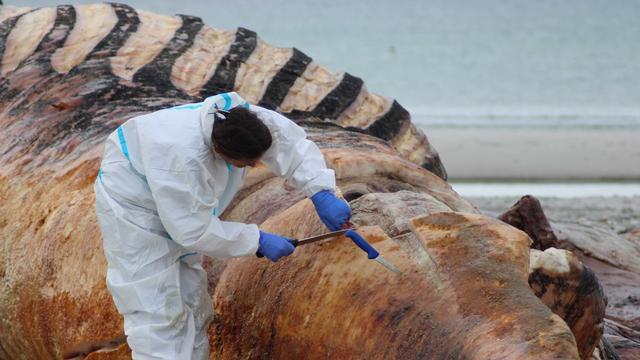
Following the dissection of a deceased humpback whale nicknamed "Timmy" in Denmark, several museums are vying for its remains. The Copenhagen Natural History Museum has acquired a selection of bones, including a flipper, pelvic bones, and vertebrae, though they will not be put on public display for the time being.
We have secured some bones, including a flipper, pelvic bones, and vertebrae.
Interest in "Timmy's" bones extends beyond Denmark, with museums in Germany and the Netherlands also seeking to obtain them. Daniel Klingberg Johansson, who manages the collection at the Copenhagen museum, stated that these remains could be used to explore various perspectives on our relationship with animals and nature. The handling of the whale's case had previously sparked criticism from experts in Denmark and Germany.
We will not be exhibiting the bones ourselves, at least for now.
The weakened whale had repeatedly stranded itself off the German coast. Despite scientific recommendations, a private initiative transported it to the North Sea via cargo ship, leading to its death shortly after. Its carcass later washed ashore on the Danish island of Anholt.
How do we view an animal? And how do we deal with nature?
Scientists and veterinarians who examined the carcass confirmed it was a female. Johansson noted that preserving the entire skeleton would have required significant investment due to the whale's large size, hence only partial remains were secured. While some bones may be displayed in museums for centuries, offering potential for DNA analysis, the rest of the carcass was sent to a factory for processing into biodiesel.
Because the whale was so large, it would have required greater investment to collect and preserve the entire skeleton.
DistantNews Editorial
Originally published by Die Zeit in German. Translated, summarized, and contextualized by our editorial team with added local perspective. Read our editorial standards.
More Stories


From Our Blog

What Gets Lost (and Found) When News Is Translated

How the Same Story Looks Different in Different Countries

The Critical Role of Diaspora Media in Global News

What Travellers Should Know About Countries with Restricted Press

A Digital Nomad's Guide to Following Local News
