


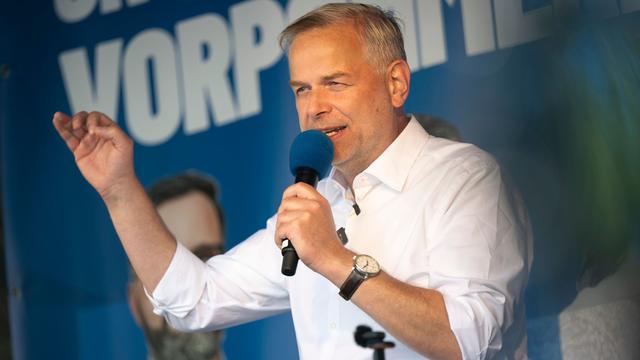
MV state election: AfD aims for solo government, hopes for momentum from Saxony-Anhalt
Translated from German, summarized and contextualized by DistantNews.
At a glance
News
From a news agency
New plan
- The AfD's candidate for state premier in Mecklenburg-Vorpommern, Leif-Erik Holm, aims for the party to govern alone in the upcoming September elections.
- Holm expressed hope that the AfD could achieve around 43 percent of the vote, drawing potential momentum from the AfD's strong showing in the recent Saxony-Anhalt state election.
- The party's general secretary, Dario Seifert, suggested that even if an outright majority isn't achieved, other parties might form "AfD-defense coalitions" that would eventually fail, paving the way for AfD rule.
Leif-Erik Holm, the Alternative for Germany (AfD) party's candidate for state premier in Mecklenburg-Vorpommern, has reiterated his goal for the party to govern alone following the state elections on September 20. Holm stated at the AfD's official campaign launch in Stralsund that achieving sole governance is the "great task."
Holm expressed optimism about the party's prospects, estimating they could reach approximately 43 percent of the vote. He believes the AfD can gain momentum from the recent state election in Saxony-Anhalt, where the party also led in polls. "If they can manage that, what do you think will happen?" Holm asked the crowd, suggesting a powerful final campaign push.
Recent polls indicate the AfD is leading in Mecklenburg-Vorpommern, but still short of Holm's target. An Infratest dimap poll from early July placed the party at 36 percent. In Saxony-Anhalt, the same polling firm indicated the AfD was at 41 percent shortly before its state election.
Meanwhile, Dario Seifert, the AfD's general secretary in Mecklenburg-Vorpommern, prepared for scenarios where the party might not secure an absolute majority. He alluded to potential "AfD-defense coalitions" formed by other parties, similar to those in Thuringia, predicting such alliances would be short-lived and ultimately benefit the AfD.
DistantNews Editorial
Originally published by Die Zeit in German. Translated, summarized, and contextualized by our editorial team with added local perspective. Read our editorial standards.
More Stories



From Our Blog

What Gets Lost (and Found) When News Is Translated

How the Same Story Looks Different in Different Countries

The Critical Role of Diaspora Media in Global News

What Travellers Should Know About Countries with Restricted Press

A Digital Nomad's Guide to Following Local News
