


Myanmar earthquake experts urge Yangon to boost building inspections after aftershocks
Translated from English, summarized and contextualized by DistantNews.
At a glance
News
Named sources
Ongoing story
- An earthquake monitoring body urged Yangon authorities to increase building inspections after unusual aftershocks from a May 18 quake.
- The Myanmar Earthquake Committee proposed a pilot project to assess building integrity and improve disaster preparedness in the city.
- Concerns remain about older and smaller buildings, many constructed before formal inspection processes, lacking earthquake resilience in their design.
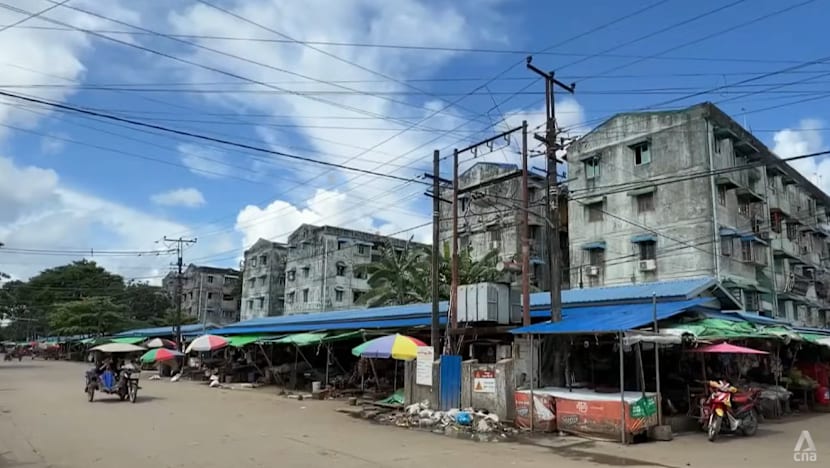
Authorities in Yangon are being urged to intensify building inspections following a series of unusual aftershocks from a magnitude 5.2 earthquake that struck Myanmar's largest city on May 18, 2026. The Myanmar Earthquake Committee has proposed a pilot project in collaboration with the Yangon City Development Committee (YCDC) to assess the structural integrity of buildings and bolster the city's disaster preparedness.
The plan is to conduct a comprehensive visual screening of a single street or ward and present our findings.
Experts described the multiple aftershocks within a single day as unusual for Yangon. The proposed pilot project involves a comprehensive visual screening of a street or ward to demonstrate its practical value to senior officials, with the aim of scaling up the project systematically across the city.
While many high-rise buildings in Yangon are generally constructed to safety standards, significant gaps exist, particularly in older and smaller structures. Historically, mandatory building reviews were only required for buildings with eight or nine stories, leaving smaller ones largely unregulated. Many older low- and mid-rise buildings were built before formal inspection processes were introduced, and earthquake resilience was not a design consideration.
Once we demonstrate the practical value of this pilot study to senior officials, the project can be scaled up systematically across townships and districts.
The YCDC's priorities include assessing existing hospitals, schools, and public markets. The proposed evaluation process involves a basic visual screening to estimate a building's age, construction type, and structural layout for initial resilience assessment. If a building shows signs of distress, a more detailed inspection follows. In critical cases, full structural engineering calculations are performed, similar to new building assessments, to determine necessary retrofitting or repairs.
First, we conduct a basic visual screening to estimate the building's age, construction type, and structural layout to evaluate its initial resilience.
Residents have expressed concern following smaller earthquakes in Yangon in June, with reports of visible cracks and minor damage in some housing structures. The inspections aim to provide reassurance and address these ongoing safety worries.
Second, if a building shows signs of distress during this phase, we move to a slightly more detailed inspection.
DistantNews Editorial
Originally published by CNA in English. Translated, summarized, and contextualized by our editorial team with added local perspective. Read our editorial standards.
More Stories



From Our Blog

What Gets Lost (and Found) When News Is Translated

The Critical Role of Diaspora Media in Global News

What Travellers Should Know About Countries with Restricted Press

A Digital Nomad's Guide to Following Local News

How the Same Story Looks Different in Different Countries
