


Myanmar's ASEAN ties strained despite engagement signs
Translated from English, summarized and contextualized by DistantNews.
At a glance
News
Named sources
Context piece
- Myanmar's relationship with ASEAN remains strained over five years after the 2021 military coup, despite recent efforts at renewed engagement.
- ASEAN has excluded Myanmar's leader from high-level meetings until progress is made on its Five-Point Consensus, which calls for an end to hostilities and dialogue.
- Analysts suggest Myanmar's current leaders must prioritize national reconciliation and policy preparation to mend ties with ASEAN and move forward.
Myanmar marked its 29th anniversary as a member of the Association of Southeast Asian Nations (ASEAN) on Thursday, but its ties with the regional bloc remain tense more than five years after the 2021 military coup. Despite recent signs of renewed engagement, the fundamental issues persist.
Following the coup, ASEAN barred Myanmar's leader, Min Aung Hlaing, and his foreign minister from high-level meetings. This exclusion will continue until there is demonstrable progress on ASEAN's Five-Point Consensus. The consensus demands an immediate cessation of violence, constructive dialogue among all parties, the appointment of a special envoy to mediate talks, humanitarian assistance, and the envoy's unimpeded access.
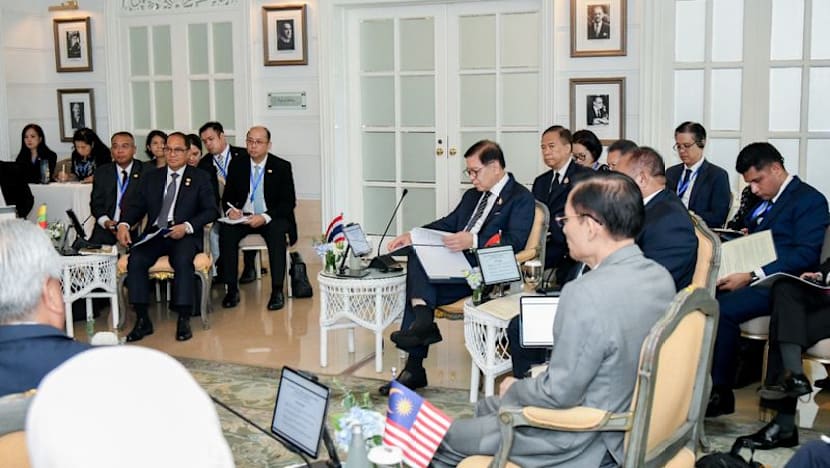
Analysts note that the Five-Point Consensus has yet to be meaningfully implemented. Nevertheless, engagement between Myanmar and ASEAN has not been entirely severed, with the country being represented at meetings by non-political officials. This approach was evident on July 12, when Thailand facilitated an in-person meeting involving ASEAN foreign ministers, including Myanmar's Foreign Minister Tin Maung Swe.
We are members of ASEAN. So, we will get back to a normal relationship with ASEAN.
The engagement comes as Myanmar seeks to normalize its relationship with ASEAN after years of being sidelined from the bloc's top-tier gatherings. Min Aung Hlaing stated in April, “We are members of ASEAN. So, we will get back to a normal relationship with ASEAN.” However, ASEAN continues to engage Myanmar under carefully defined terms, reflecting a delicate balancing act.
This situation mirrors ASEAN's strategy three decades ago. After the 1988 crackdown on pro-democracy protests, the bloc pursued "constructive engagement" rather than isolation, even as Myanmar was widely considered a pariah state. Myanmar eventually joined ASEAN in 1997 and later embarked on political reforms. Analysts believe the responsibility now lies with Myanmar's current leaders to chart a path toward national reconciliation and repair ties with ASEAN. Khin Zaw Win, director of the Tampadipa Institute, stated that normalizing ties with ASEAN should have been a foreign policy priority prepared well in advance of elections, requiring professional staff to develop policy documents.
Those kinds of policy documents have to be prepared by a trained professional staff.
DistantNews Editorial
Originally published by CNA in English. Translated, summarized, and contextualized by our editorial team with added local perspective. Read our editorial standards.
More Stories


From Our Blog

What Gets Lost (and Found) When News Is Translated

The Critical Role of Diaspora Media in Global News

What Travellers Should Know About Countries with Restricted Press

A Digital Nomad's Guide to Following Local News

How the Same Story Looks Different in Different Countries
