


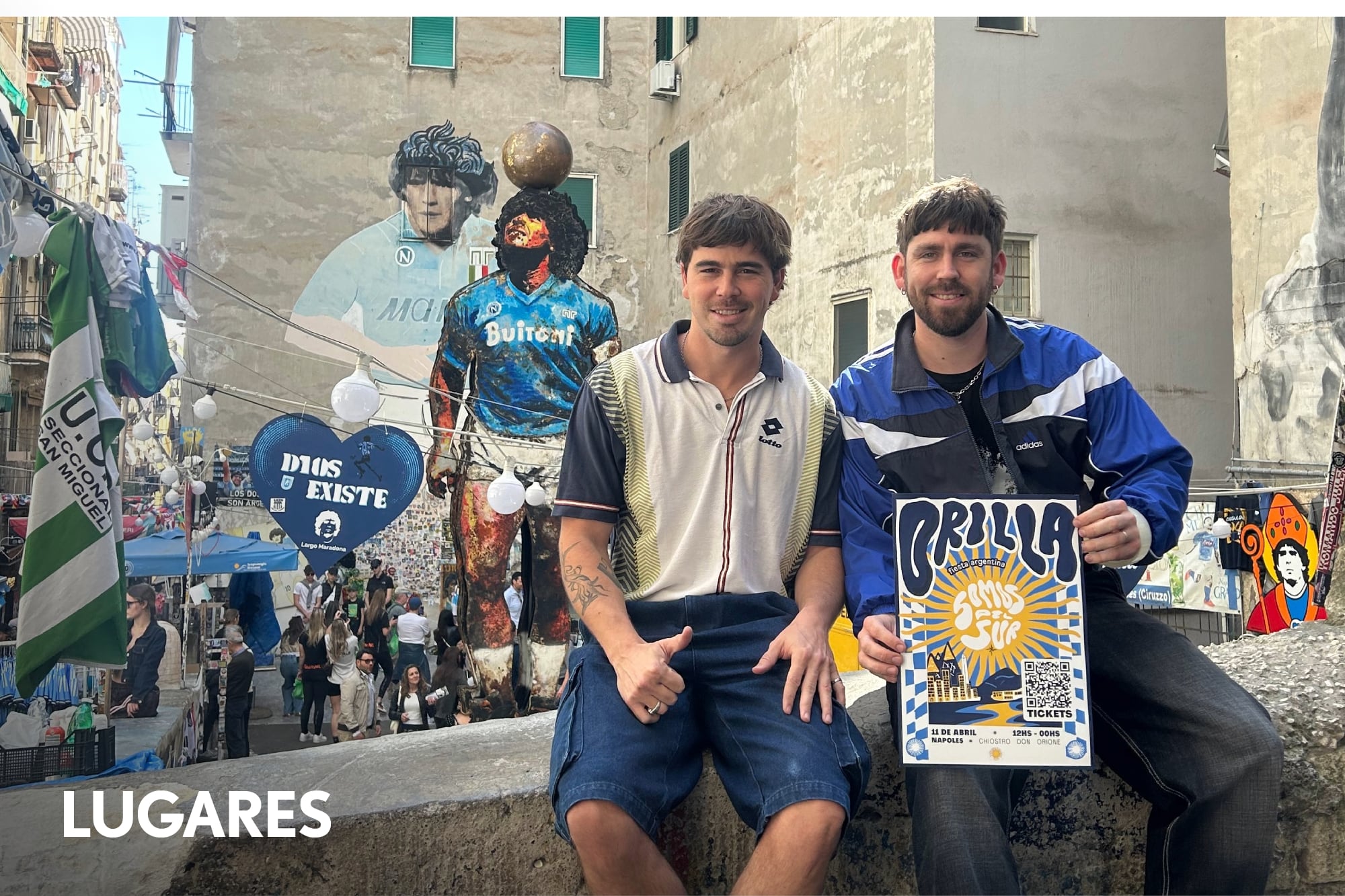
Naples Becomes a Slice of Argentina with 'Orilla' Festival
Translated from Spanish, summarized and contextualized by DistantNews.
TLDR
- A festival celebrating Argentine culture, named 'Orilla,' was held in Naples, Italy, attracting thousands of attendees.
- The event featured Argentine food, music, and a strong sense of community among Argentines living in Europe and Italians.
- It aimed to create a connection between Naples and Buenos Aires, highlighting their shared 'southern' identity.
Naples transformed into a vibrant hub of Argentine culture as the 'Orilla' festival brought together thousands for an immersive celebration of heritage. This unique event, held in the heart of Italy, resonated deeply with Argentines living across Europe and Italians who share a profound connection with Argentine traditions, particularly through the enduring legacy of Diego Maradona.
The festival was more than just a gathering; it was described as a reunion, a 'pagan mass,' where the aromas of asado, the sounds of cumbia, and the ubiquitous presence of fernet and mate created an atmosphere akin to being in Argentina itself. The organizers, Juan Bautista Smart and Federico Giordano, envisioned 'Orilla' as a bridge between Naples and Buenos Aires, two cities they perceive as sharing a distinct 'southern' spirit—chaotic, sentimental, and deeply passionate.
We are from the south, we are southerners, we are southerners with dreams.
La Nación highlights how 'Orilla' successfully captured the essence of Argentine identity abroad, fostering a sense of belonging and shared experience. For many attendees, especially those far from home, the festival provided a much-needed connection to their roots and a platform to share their culture. The event's success underscores the powerful cultural diaspora of Argentina and its ability to create vibrant communities and celebrations, even on foreign soil, reinforcing the idea that 'we are from the south, we are southerners, we are southerners with dreams.'
Many people come with a dream of changing completely, and here too it is difficult, one misses home, people suffer.
DistantNews Editorial
Originally published by La Nación in Spanish. Translated, summarized, and contextualized by our editorial team with added local perspective. Read our editorial standards.
More Stories



From Our Blog

What Gets Lost (and Found) When News Is Translated

The Critical Role of Diaspora Media in Global News

What Travellers Should Know About Countries with Restricted Press

A Digital Nomad's Guide to Following Local News

How the Same Story Looks Different in Different Countries
