

NASA's X-59 aircraft breaks sound barrier in experimental supersonic flight
Translated from Romanian, summarized and contextualized by DistantNews.
At a glance
News
From a news agency
Ongoing story
- NASA's experimental X-59 aircraft broke the sound barrier for the first time in a test flight.
- The aircraft reached Mach 1.1 (1,147 km/h) at an altitude of 13,228 meters during the flight from Edwards Air Force Base.
- This milestone is part of developing technology for quiet supersonic flight, with future tests planned to reach Mach 1.4.
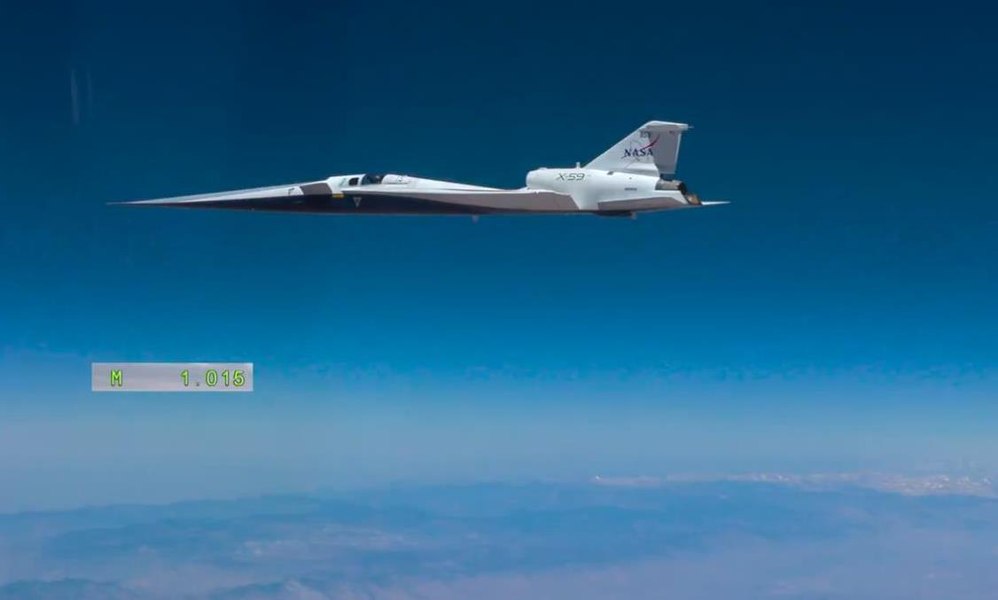
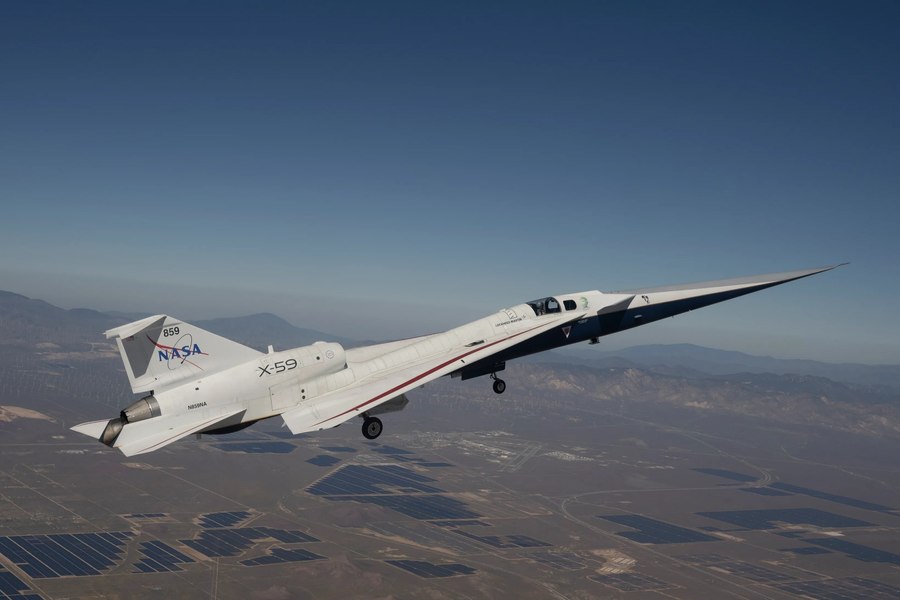
NASA's experimental X-59 aircraft has achieved a significant milestone, successfully breaking the sound barrier for the first time in a crucial test flight. Piloted by NASA test pilot Jim "Clue" Less, the aircraft took off and landed at Edwards Air Force Base in California, reaching a top speed of approximately Mach 1.1, equivalent to 1,147 km/h, at an altitude of 13,228 meters. This flight marks a pivotal step in the development of quiet supersonic flight technology.
The 81-minute flight, which began Friday at 11:08 AM local time, focused on evaluating the aircraft's capabilities at both subsonic and supersonic speeds. NASA Administrator Jared Isaacman expressed gratitude to the joint NASA and Lockheed Martin Skunk Works team, stating, "I am grateful to the NASA and Lockheed Martin Skunk Works team for their help in bringing us to this point and hope this is the first of many collaborations as we rebuild NASA's X-plane portfolio."
The X-59 is specifically designed to fly at supersonic speeds while producing only a low thump instead of the disruptive sonic boom typically associated with such flights. During this particular test, a NASA F-15 chase plane flew nearby to monitor the X-59, its own sonic booms masking any sound produced by the experimental aircraft. This successful supersonic flight follows an extensive testing period, including 16 test flights over the past 90 days since its initial flight in October.
Looking ahead, the X-59 is scheduled for its first "mission conditions" flight in the coming days. This next phase aims to push the aircraft to a cruising speed of Mach 1.4 (1,489 km/h) at an altitude of approximately 16,764 meters, further testing its advanced aerodynamic design and quiet supersonic capabilities.
DistantNews Editorial
Originally published by Adevărul in Romanian. Translated, summarized, and contextualized by our editorial team with added local perspective. Read our editorial standards.
More Stories


From Our Blog

What Gets Lost (and Found) When News Is Translated

The Critical Role of Diaspora Media in Global News

What Travellers Should Know About Countries with Restricted Press

A Digital Nomad's Guide to Following Local News

How the Same Story Looks Different in Different Countries
