


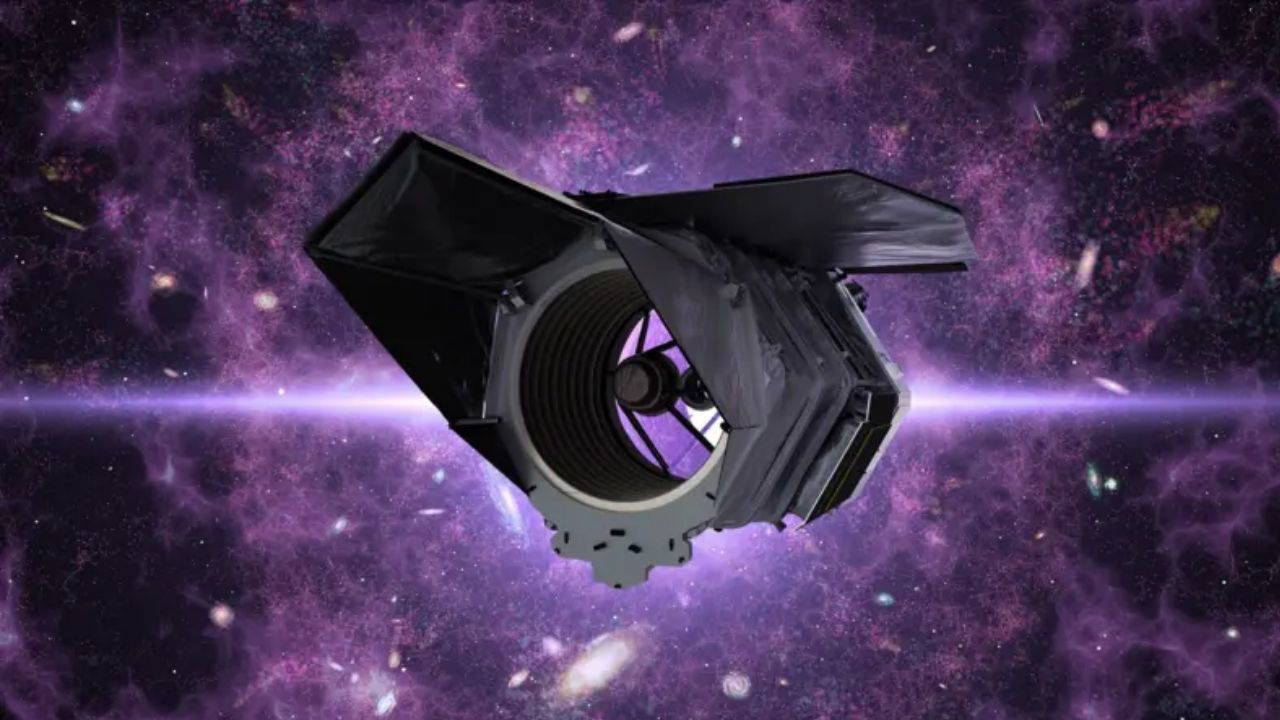
NASA telescope poised to rewrite understanding of the universe
Translated from Turkish and summarized by DistantNews. Read the original for the full story.
At a glance
News
Sources not specified
New plan
- The Nancy Grace Roman Space Telescope, launching August 30, will conduct the largest census of exoplanets to date.
- Unlike Hubble and James Webb, Roman will survey vast areas of the sky, capturing panoramic views and discovering billions of stars and hundreds of thousands of exoplanets.
- The telescope's capabilities, including a powerful infrared camera and a mirror donated by the National Reconnaissance Office, will enable unprecedented studies of galaxies, dark matter, and dark energy.
NASA's Nancy Grace Roman Space Telescope, set to launch on August 30 from the Kennedy Space Center in Florida, promises to revolutionize our understanding of the cosmos. Named in honor of the agency's first female administrator and chief astronomer, the telescope is equipped to make groundbreaking discoveries, from identifying new planets to unraveling the mysteries of galaxy evolution and the fundamental nature of dark matter and dark energy.
We will conduct the largest census of planets around other stars.
Dr. Julie McEnery, a senior scientist for the mission, highlighted Roman's ambitious goal: "We will conduct the largest census of planets around other stars." She further explained that the telescope's instruments will allow scientists to examine "everything in the universe, all galaxies, stars, extraordinary objects."
Roman's approach differs significantly from its predecessors like Hubble and James Webb. Instead of focusing on individual celestial bodies, it will scan immense portions of the sky. Dr. Noelia Noël, an astrophysicist at the University of Surrey, described this capability as providing "Hubble-like vision, but on a panoramic scale," allowing it to see "at least 100 times more sky in a single glance."
With the amazing instruments found in Roman, we will examine everything in the universe, all galaxies, stars, extraordinary objects.
A unique aspect of the Roman telescope is its 2.4-meter primary mirror, originally developed by the U.S. National Reconnaissance Office for spy satellites. Noël noted the poetic transition: "technology initially developed to look down at Earth from above has been transformed into a telescope that will look out at the universe billions of light-years away."
It provides us with Hubble-like vision, but on a panoramic scale.
This donated mirror, extensively refurbished for its new purpose, enables Roman to observe fainter objects and provide clearer views than initially planned, according to McEnery. At its heart lies the Wide Field Instrument, a 300-megapixel infrared camera designed to capture colossal images. NASA estimates Roman could discover over 20 billion stars in our galaxy within just one month, creating the largest astronomical object catalog ever compiled. The telescope is also expected to identify new exoplanets orbiting these stars, potentially increasing the known count from just over 6,000 to over 100,000.
technology initially developed to look down at Earth from above has been transformed into a telescope that will look out at the universe billions of light-years away.
About this summary
Originally published by Cumhuriyet in Turkish. Translated, summarized, and contextualized automatically by DistantNews, with a note on how the source frames the story. Not individually reviewed before publishing. How this works.
More Stories



From Our Blog

What Gets Lost (and Found) When News Is Translated

The Critical Role of Diaspora Media in Global News

What Travellers Should Know About Countries with Restricted Press

A Digital Nomad's Guide to Following Local News

How the Same Story Looks Different in Different Countries
